I am a lover and consumer of storytelling, so much so I'm devoting this blog to demystifying the ones that has captivated me the most.
By trade I'm an artist, and my aspirations waiver between architectural drafting and sequential art.
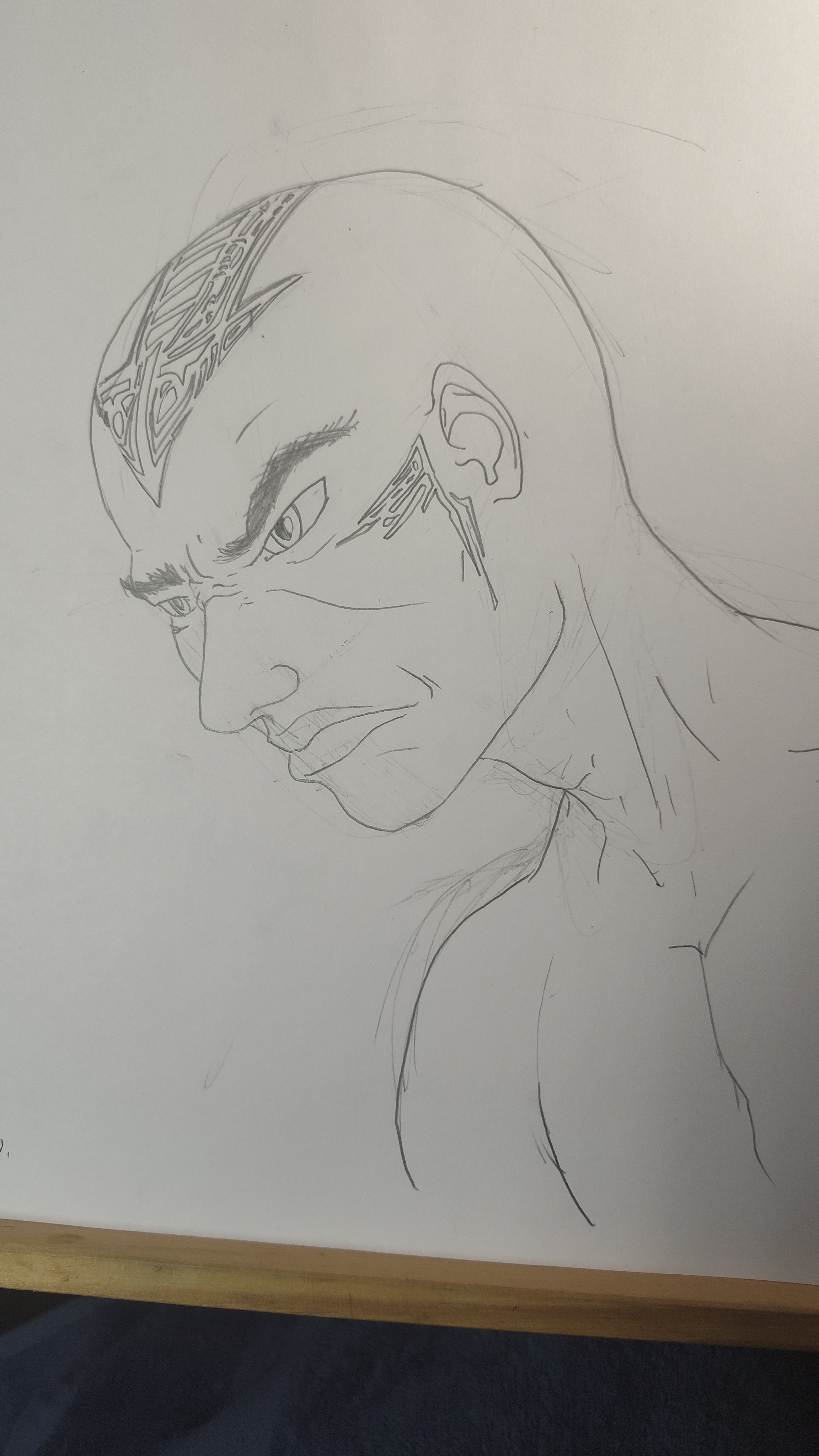
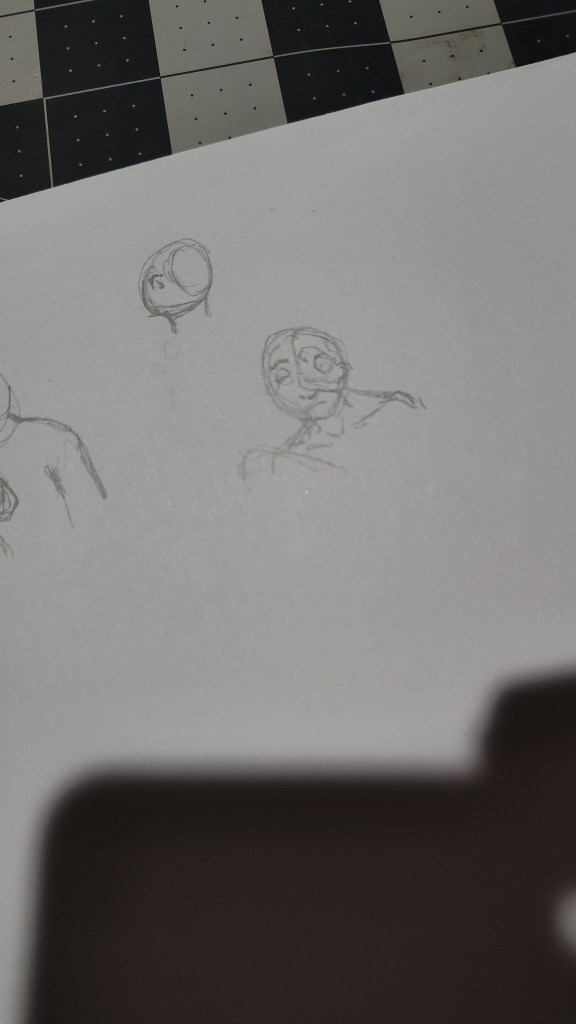
What started out as a simple eye warm-up became a bust figure with “The Last Airbender” scalp and sideburn tattoos. The hardest part of drawing this viewpoint is getting the eye proportions correct. I did a good job.
I was happy I sat down to draw, yet I felt unsatisfied altogether.
I had similar feelings on my latest drawings and all my warm-up illustrations. I was too busy questioning my work. How much easier would my approach to drawing eyes be if I had drawn more? Would I have just drawn a head or the whole body? Would my speed be faster? I focused on what could’ve been. Every question was fixated on the past, so I couldn’t enjoy the moment. Old mistakes are hindering new possibilities.
Inconsistency stunts growth. And regret is creating the same effect. I’m fortunate I have not lost my ability to draw and be creative. But the internal pressure makes drawing difficult.
This problem will never go away. Removing the pressure by not drawing only invites a stronger emotion, leading to the same dread.
However, a solution came to mind while drawing. Guilt and regret are a part of the process. Working despite their presence creates an antidote. I was never finding the cure from withdrawing; otherwise, my professional outlook would be different and better. Drawing despite those feelings removes them. I have to accept that to draw again.
If I had drawn often in my earlier work years, I would have realized this sooner. Lessons are more instilled when you’re in the practice of your profession or hobby. I don’t regret the knowledge I’ve collected over the years by consuming art; however, real progress could have been made if I drew more.
I still carry the weight of my past mistakes with me. Their values ebb and flow. This drawing didn’t happen by figuring out how to overcome those feelings. I drew and answers came later. Not enough to eliminate this long-standing block. But enough to get closer to a solution and enough to relive something I once enjoyed.
I was afraid of my art. And the fear was beyond unreasonable.
There is only a medium to canvas. Lines upon lines. Graphite, markers, paint and inks to board paper. The only loss to drawing is time, yet the finished illustration COULD replace its value.
My repel from drawing matches the reaction of someone’s life being threatened. I’m not a surgeon in an operating room. There is no real battlefield that my art will defend or destroy. And I’m not developing infrastructure to support millions of people.
Like clockwork, I sit on my desk unable to produce anything. There are many days I don’t make it that far. I try talking myself over this barrier. The encouragement lasts only as long as the conversation.
I thought my habits were the main issue. I can fill a stadium wall of tally marks to the moments I’ve missed art, even only counting the last sixteen years. More failures than strides creates a pattern too overbearing to course correct. There was a time I though my fear was from outgrowing the life I admired. I would have to give up most of my social and family life to put in the hours needing to be a successful illustrator. I was not ready for that. Even if possible, the earn income wouldn’t justify the time commitment in the earlier years. I didn’t want to overwork myself while struggling to afford a living.
My excuses were multiple-choices!
Researching gave me the answers to many of them. The time I wasn’t drawing was still used to find answers. The internet is full of interviews, books, and courses where anything can be understood if you know what you’re looking for and come across reputable sources.
My horrible habits were the only “reasonable” excuse. Someone who doesn’t draw long enough would completely stop drawing. Routines turns to habits. Habits into character. Character into identity and destiny. The only answers I found to altering that destiny I carve for myself is to dread a path long enough to get away from it. The same efforts made to remove the identity of an artist out of my life, would be the same efforts to add it back. And it’s not a quick fix. Changing something you done for years takes time and concentration. The quicker you want that change the higher the concentration must be. And time is the biggest factor. There is no seven-day fix. You don’t complete a 30- to 90-day program and magically have that new routine ingrained in you. The problem I created took nearly two decades to create.
Life change. Not working on my art didn’t prevent change. It’s true that I would lose a lot of socializing time, yet that doesn’t mean I won’t have any time with my love ones. There are a list of professional artists I follow that manage a lucrative creative career AND a family. Enough of them took their time through books and YouTube channels to share how they’ve done it.
And finally, if the art is treated as a business, the money will follow in time. I didn’t know that lesson for the longest. There were more stories I’d read of good artist who fail to find a large enough audience, than the ones that do. When so much entertainment is available for free online, legal or otherwise, less people buy art. I had friends who follow manga stories throughout its course and not purchased a single item from its creators. That’s discouraging. But not all art made is meant for money. And the artist can grow to a popularity that he can afford to give something away to fans. It requires a lot of work to get there, but it’s possible. Far worse artists have made a wonderful living with their art.
I witness my art’s potential at the first comic convention I attended several years ago, Gump City Con 2017. I had money to artists’ wares, and I brought a small portfolio of my art to present. I asked every vendor I met about their profession after I bought from them. And with little back story of myself, I just shared my art ask asked the same type of question:
“What must I work on to be professionally ready?”
I was expecting to hear fundamental issues in my proportions and line work. I didn’t think my visual storytelling was consistent enough. And dabbing in art so infrequent made the execution of my work mediocre. Yet their reply was…
“No! You’re professionally ready now.”
This answer came from several people who knew extremely little of me. I asked that question much after I bought one of their wares. So they weren’t being nice in order to make a sale.
I have my doubts and uncertainties even to this day. There are things I need to practice to improve my art. There’s a lot of work to be done to gain the fanbase to support my craft. Those doubts and uncertainties were no reason to stop drawing; to a common man it would only encourage him to rise to the challenge.
I was a coward for something I’m extremely good at doing. I had uncertainty when all the questions I had were answered several times over in a dozen ways. Fear replaced love.
Clear, James. Atomic Habits: Tiny Changes, Remarkable Results : An Easy & Proven Way to Build Good Habits & Break Bad Ones. New York, New York, Avery, an imprint of Penguin Random House, 2018.
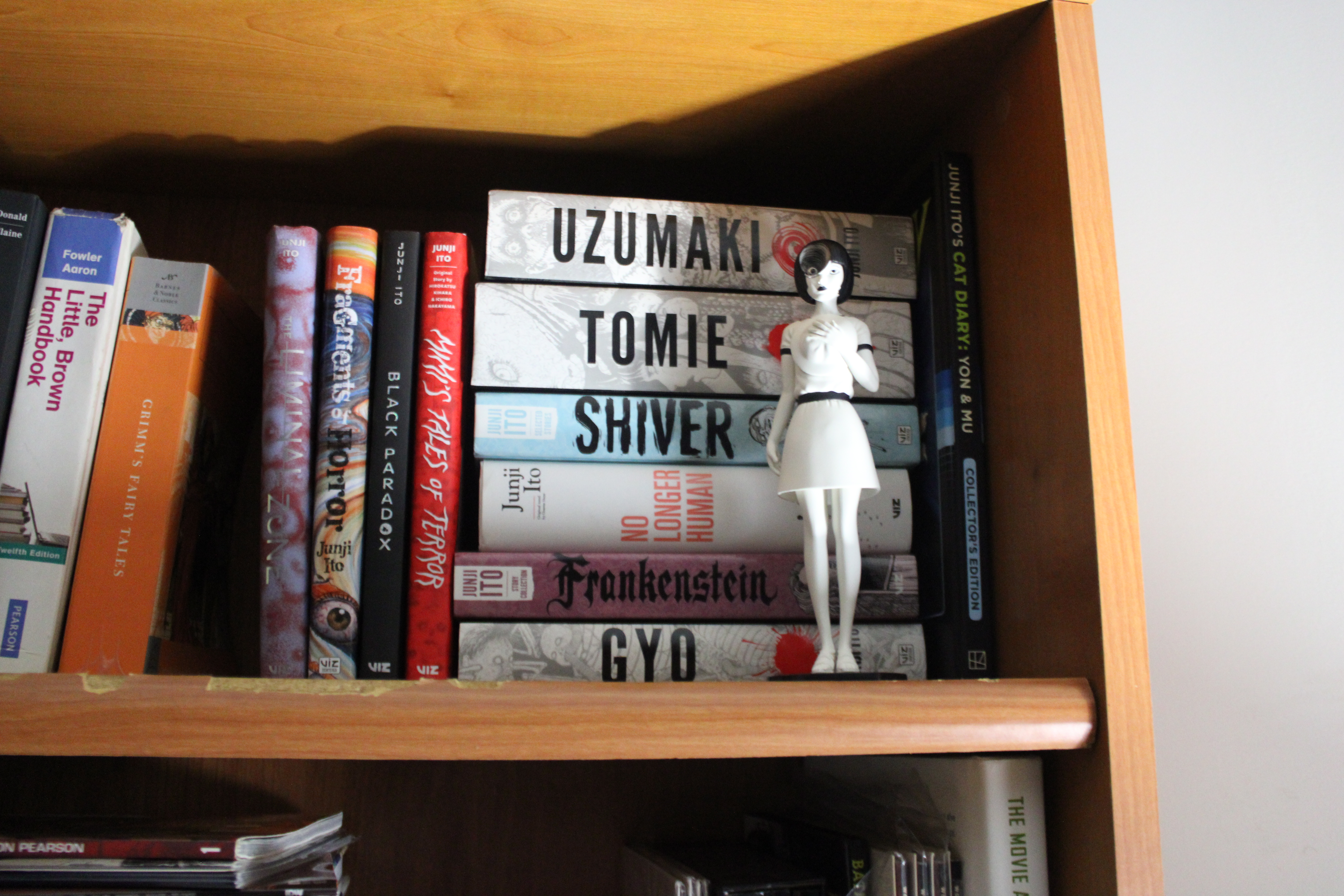
I got into Junji Ito while trying to find comic book stories outside The Hero’s Journey archetype. This was the same time I came across this YouTube video critique of his work. My interest grew from watching panel-to-panel videos of his most popular stories to buying every book I came across at the nearest Books-a-Million.
My strongest attraction to Junji Ito’s work is the mood—the dread felt from the hopeless protagonist and the unescapable nightmares of the world Ito created. The uncomfortable feeling while reading them, and after I was done. They had definite ends but without full understandings or explanations.
It was an immediate hook!
Profile Pictures inspired by Tomie**
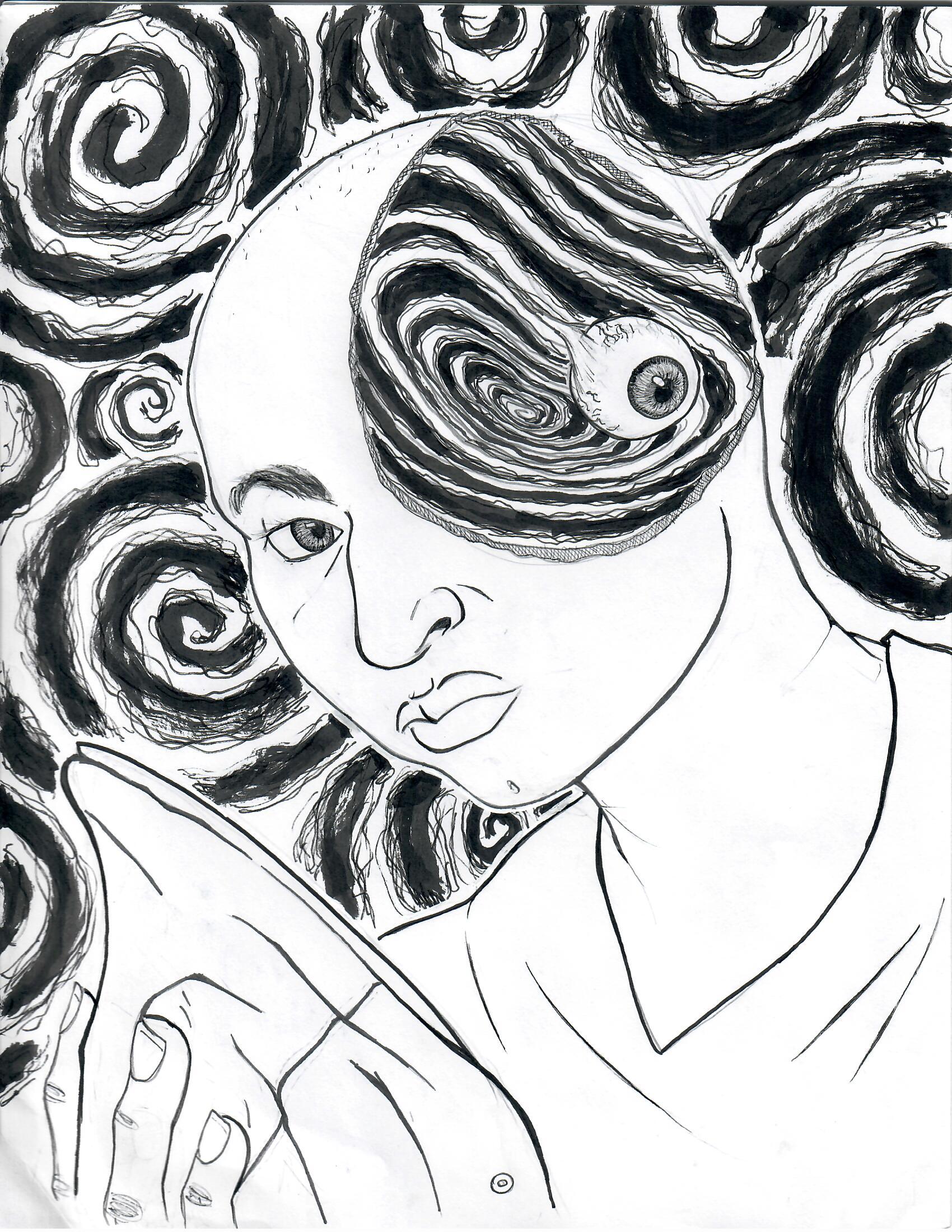
This is the first time I tried to make a self-portrait of myself inspired by Junji Ito’s work. Scanning this somehow cropped the edges. But most of the drawing is there. As much as I draw myself, it can still take me several tries to get my face shape right. I sure weight fluctuation is the problem
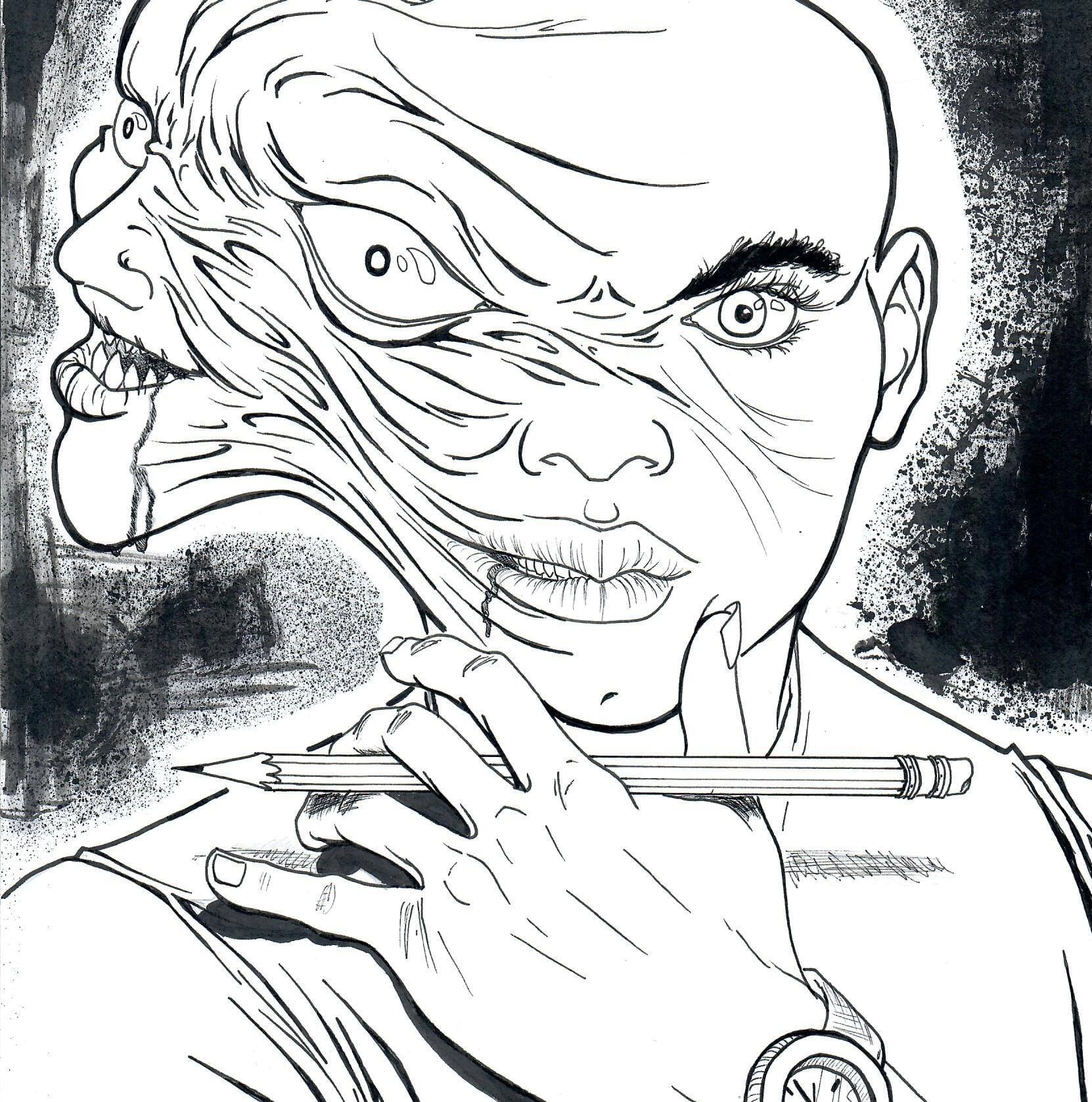
This illustration is based on the short story, Painter, a part of his collection of stories under Tomie.The Tomie series is not my favorite, but it’s his most known work. Painter tells a story of a famous painter, Mitsuo Mori, and his encounter with Tomie.
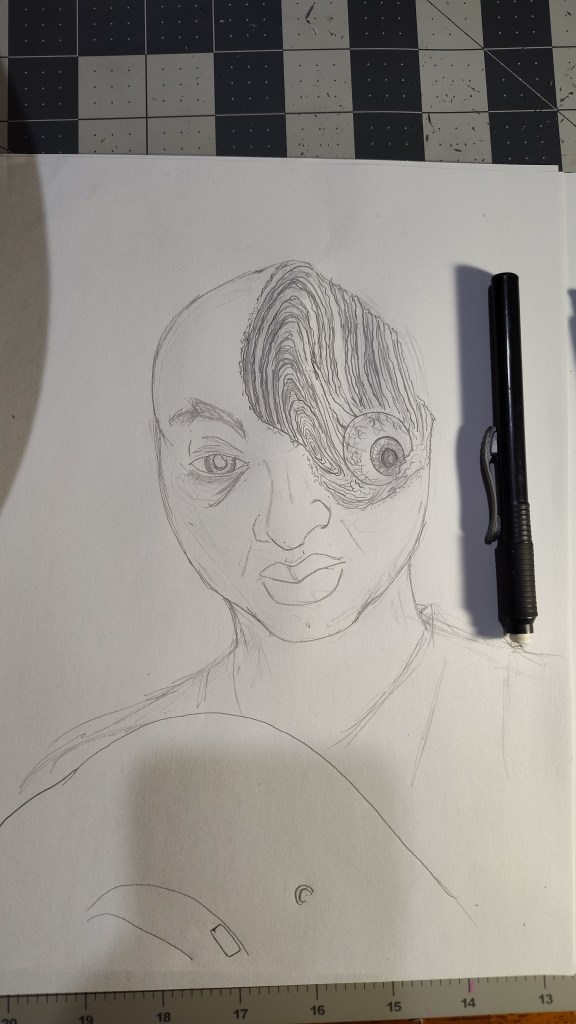
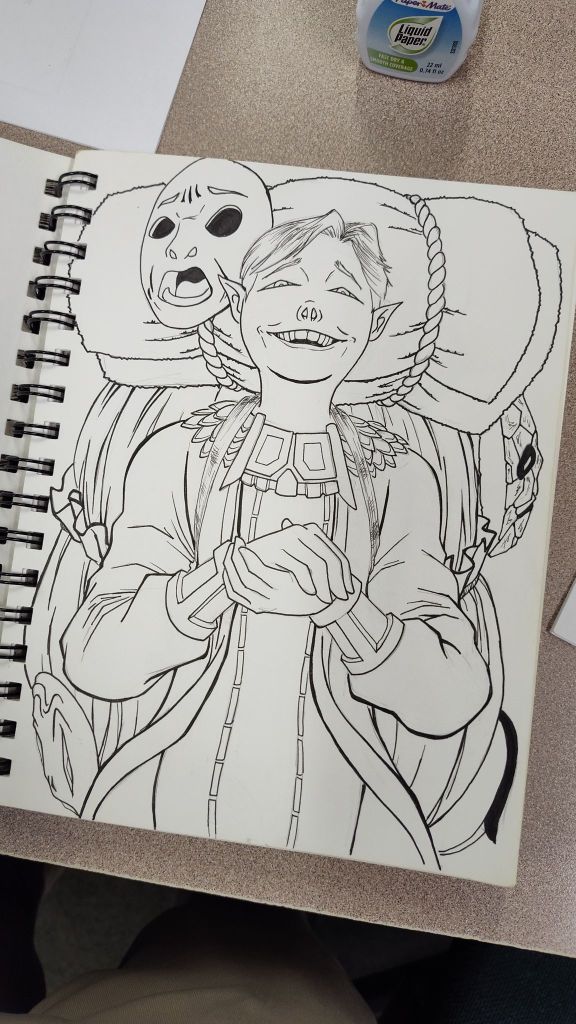
This next illustration is based on Ito’s short story, The Scar. It’s within the collection of stories in his book, Uzumaki.
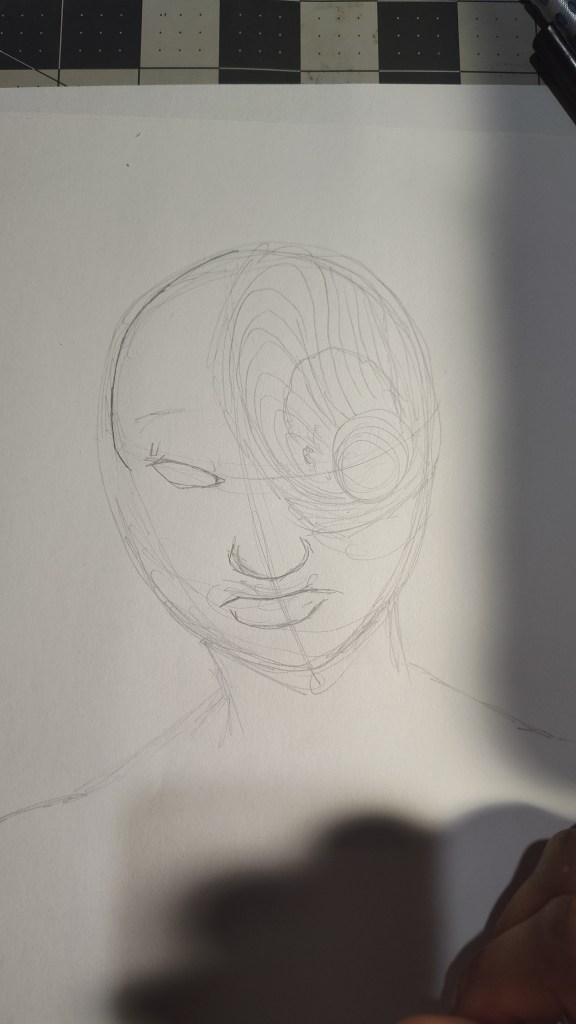
Choosing the right posture took time. I was going for the exact pose of the original image. I ended up disliking how close the shot was to the face. I redrew the camera angle further to show shoulders, but accidently warped the illustration. Unintendedly slanted. I’m sure it was from bad sitting posture.
I sat on this illustration for several weeks months until I got the courage to simply finish. I draw less details than intended on this drawing since I wanted the busy spiral background.
I love what I came up with, yet it wasn’t as well received online as the first.
The similarities in both stories are of madness that comes with an unhealthy obsession. Azami becomes hellbent on making Shuichi fall for her the same way every other man in her life has. And the obsession sucks the life out of her as much as the scar on her face does visually. All it took for Mitsuo obsession to crack was doubt of his talent from a random woman with mesmerizing beauty. Even when he changed his entire style and muse to capture her beauty on canvas, it didn’t please Tomie. Not receiving her approval drove Mitsuo to so much anger he killed and mutilated her. But her death didn’t sober him. He hallucinated Tomie’s body parts re-growing to more versions of herself. He drove himself to a slow death watching them.
PLEASE DON’T READ JUNJI ITO STORIES IF THAT DESCRIPTION BOTHERS YOU! Believe me when I say the stories are more disturbing when you read it in comic book form. It gets worse most of the time.
Obsessions can go too far. The length we’ll go to obtain that desire determines the rationale of the obsession. Are we disregarding morality and livelihood to obtain it? Are we willing to do the work necessary to get it? And what level of satisfaction are you expecting when pursing it? Obsession can all start with good intentions, but not all are good.
I’m trying to obsess over my art. A little. There are stories I want to create and share. I want to use social media to archive my efforts and to grow a fanbase who would appreciate it. But I have limits. And I have backup plans in case things go south. Yet I’m willing to give it my best efforts. I can’t afford sleepless nights, but I can commit all my available time during lunch hours and outside work. I can disregard socializing for a few years until the habit is ingrained into a consistent routine.
Out all the project I never finished, Inktober 2016 has to be my favorite.
Inktober is a creative event where artists illustrate daily prompts using ink mediums during the month of October. It’s a wonderful but demanding experience. For creators sharing their work online for the first time, it brings more viewers to the platform they use to post them. And it’s a great way to develop consistent work habits and dealing with deadline. This celebrated project was founded by artist Jake Parker.
In 2016, Jake Parker, collaborated with art supply subscription company, ArtSnacks, to make an art package dedicated to the event. I participated that year.
I had my concept planned out. I was so thrilled to begin I started a week early. I didn’t think I’ll make thirty one illustrations within a month. But I knew a lot would be done.
I was wrong.
What I wasn’t prepared for was the time needed on each illustration. To successfully balance Inktober, illustrations should lean towards simple. Two hours of work per drawing would’ve worked.
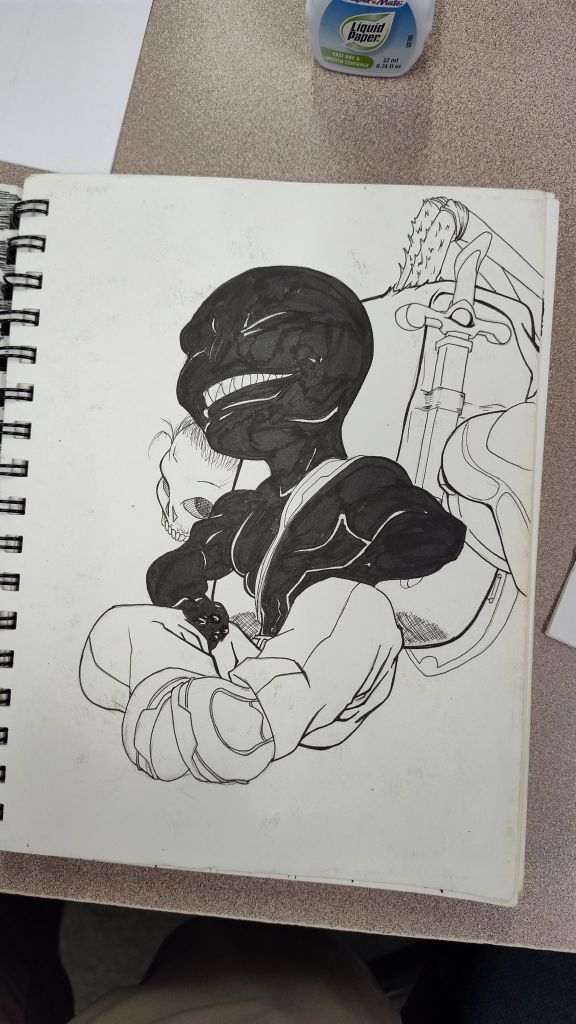
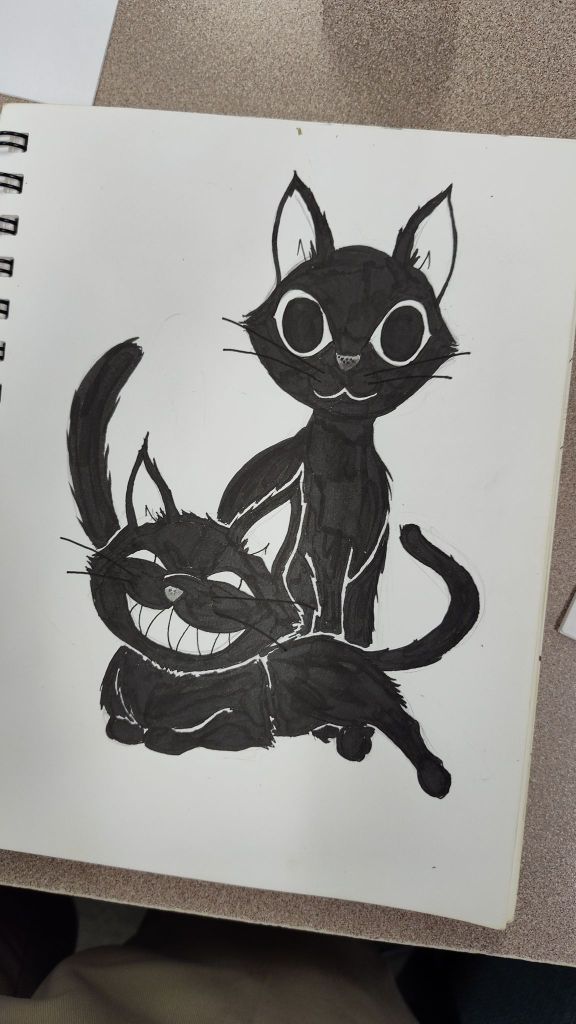
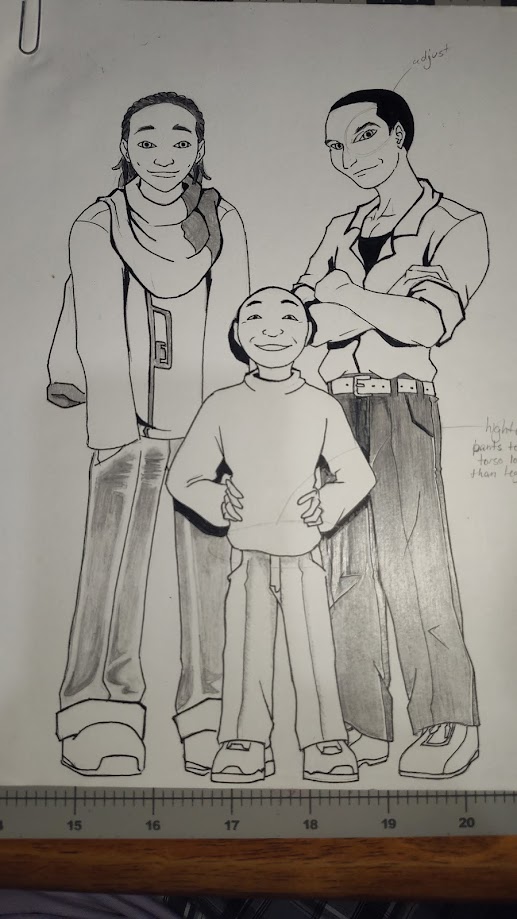
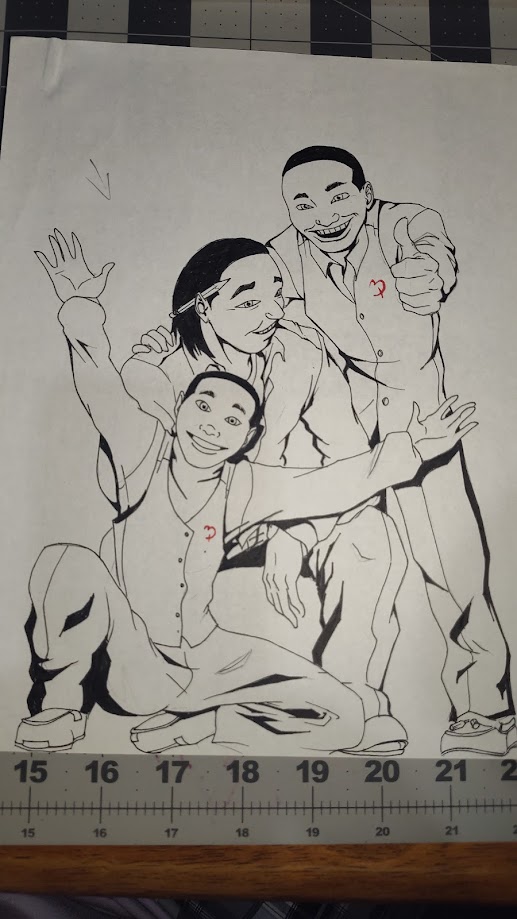
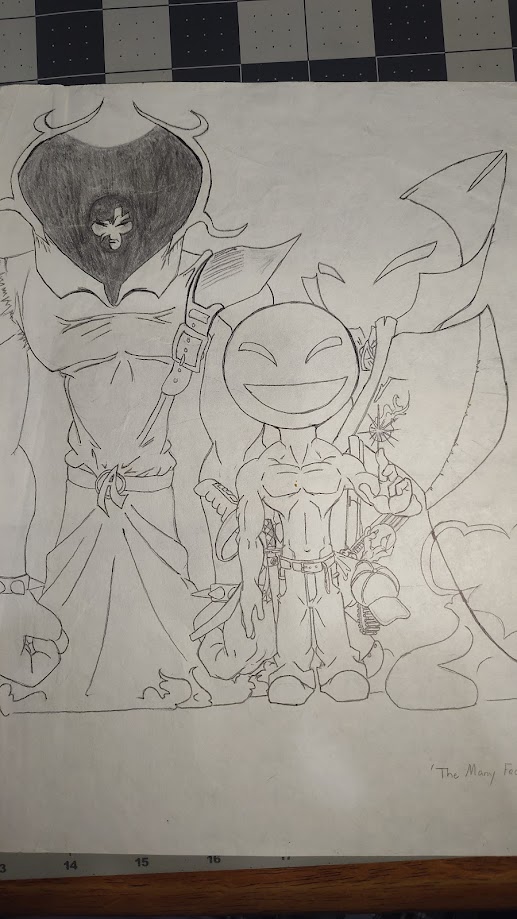
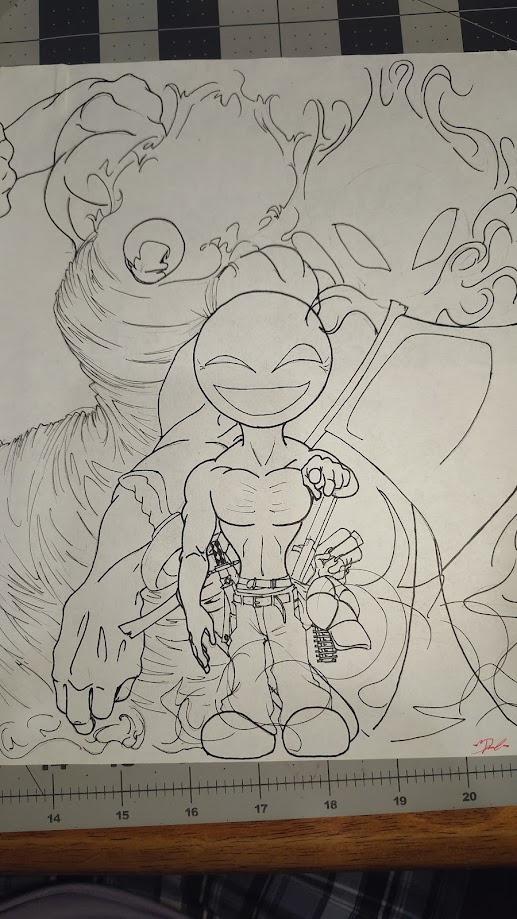
Below are four entries into Inktober 2016. Details about each artwork will be written in a later dispatch.
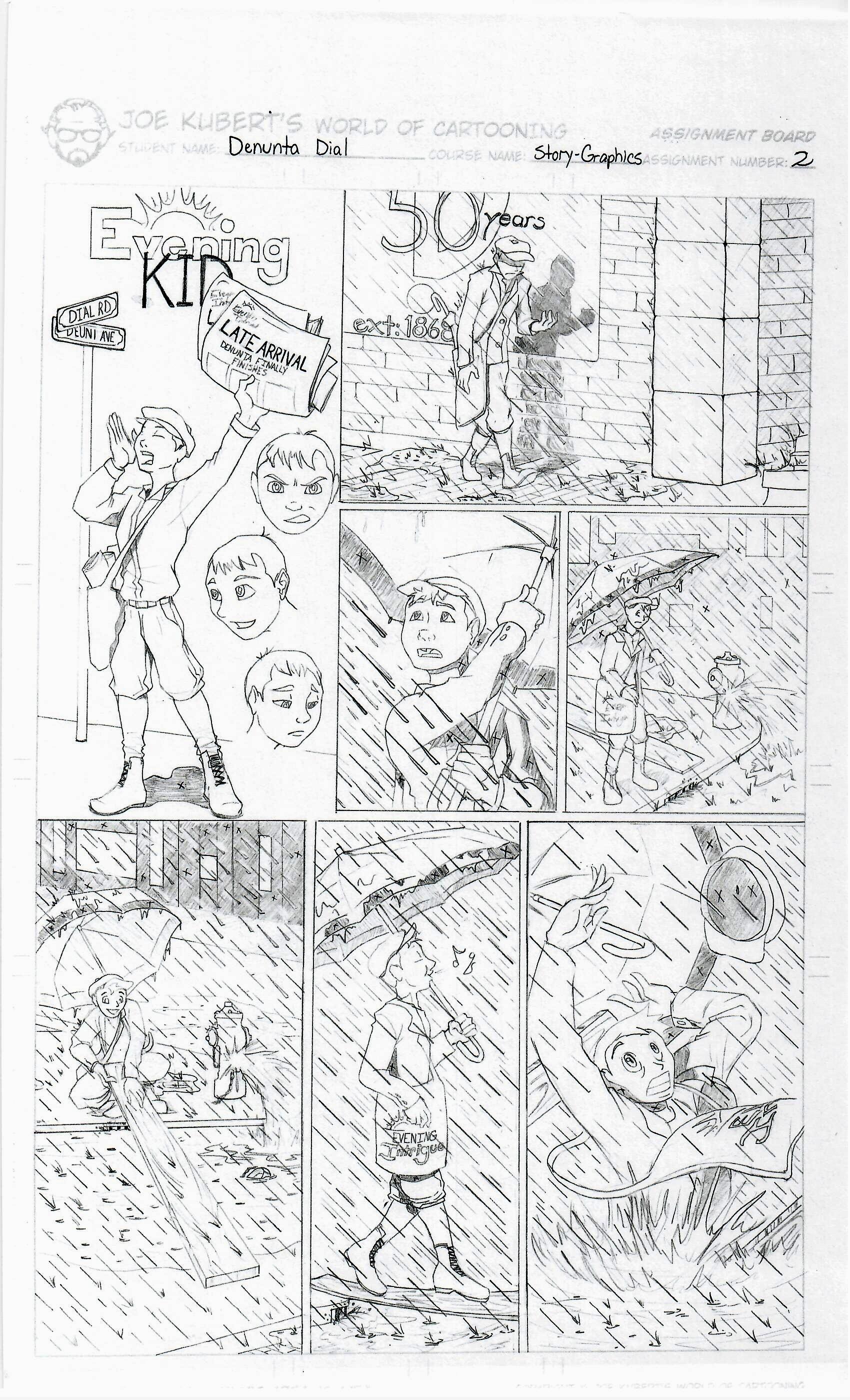
The teaching material was well constructed and very valuable, but not as beginner friendly as I hoped. The course comes with standard art supplies, an 11″ x 18″ course book, 5 comic board papers to do each homework assignment, and a large mailing envelop with cardboard support to help you mail in the assignment. The five courses gives you tips and advice to help you tackle each homework assignment and the wait time is usually 3 weeks in-between mailing the critique and redelivering it to you.
The Joe Kubert Course requires long term sessions to fully finish each coursework. I can sketch out ideas throughout my day, but I would need to sit at my drawing desk to reproduce the finish product on Bristol board paper.
Buying the course out of order may be the reason I’ve not enjoyed it as much. Penciling was the correct way to start instead of Story Graphics.
Below are work samples from the Joe Kubert Correspondence Course. And also, I’ll be doing later dispatches on what I have completed.
This is homework assignment 2 of the Joe Kubert Correspondence Course
These are the returned critiques from that assignment.
The difference in these two projects and Project SPIRIT is pre-establishment. These are a course and an event that had a predetermined set of steps to fulfill. I took liberties with INKTOBER deciding on drawing original characters and trademark characters that inspired their creation. Inktober typically provides single, daily word prompts for each day of October to draw.
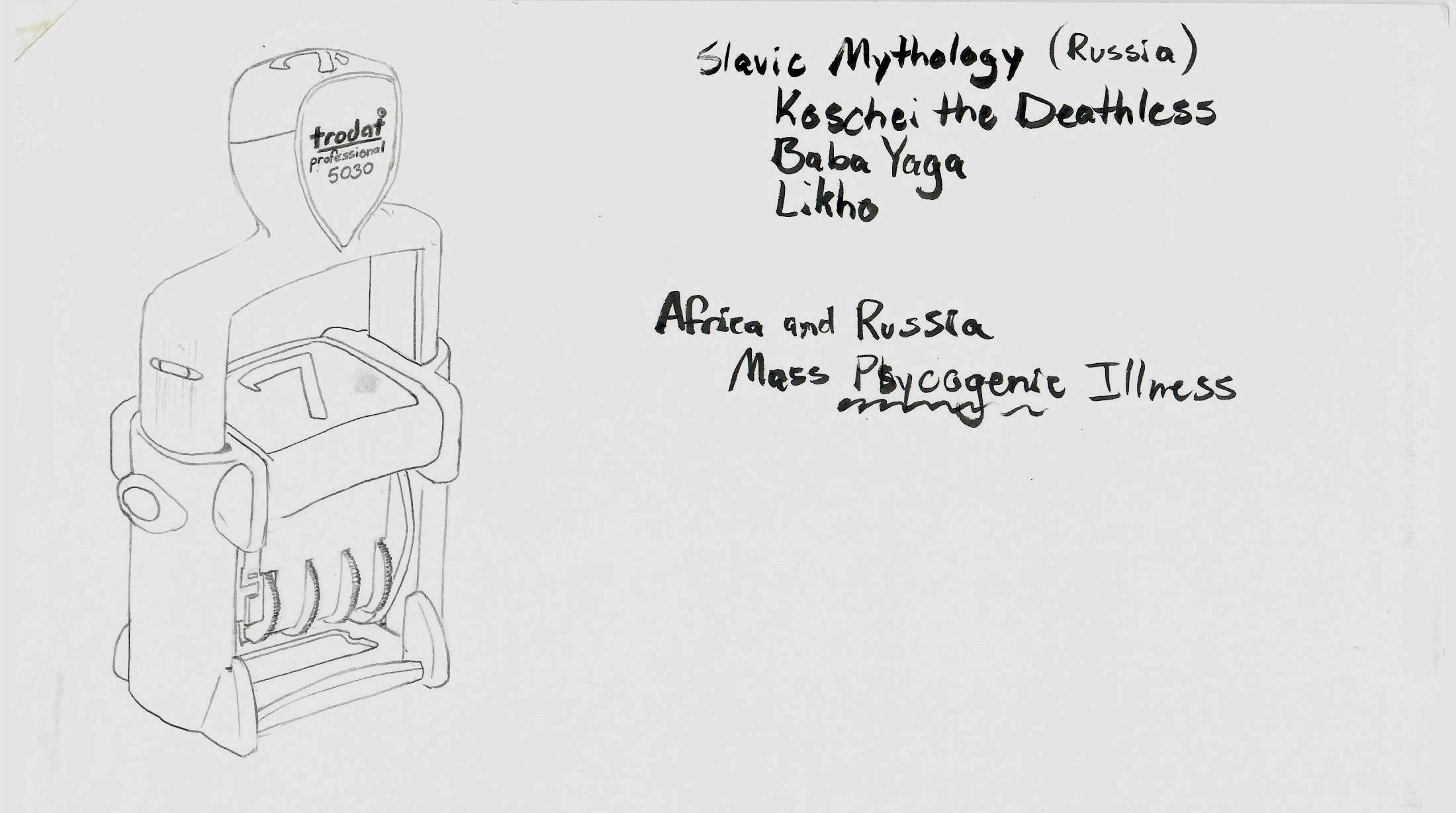
Project SPIRIT is a dream concept I’m bringing to life. There are dozens of ways to do so, even if I focus on making it a comic book series.
It’s obvious what I should focus on first. Unless I find a simpler project with an easier end goal.
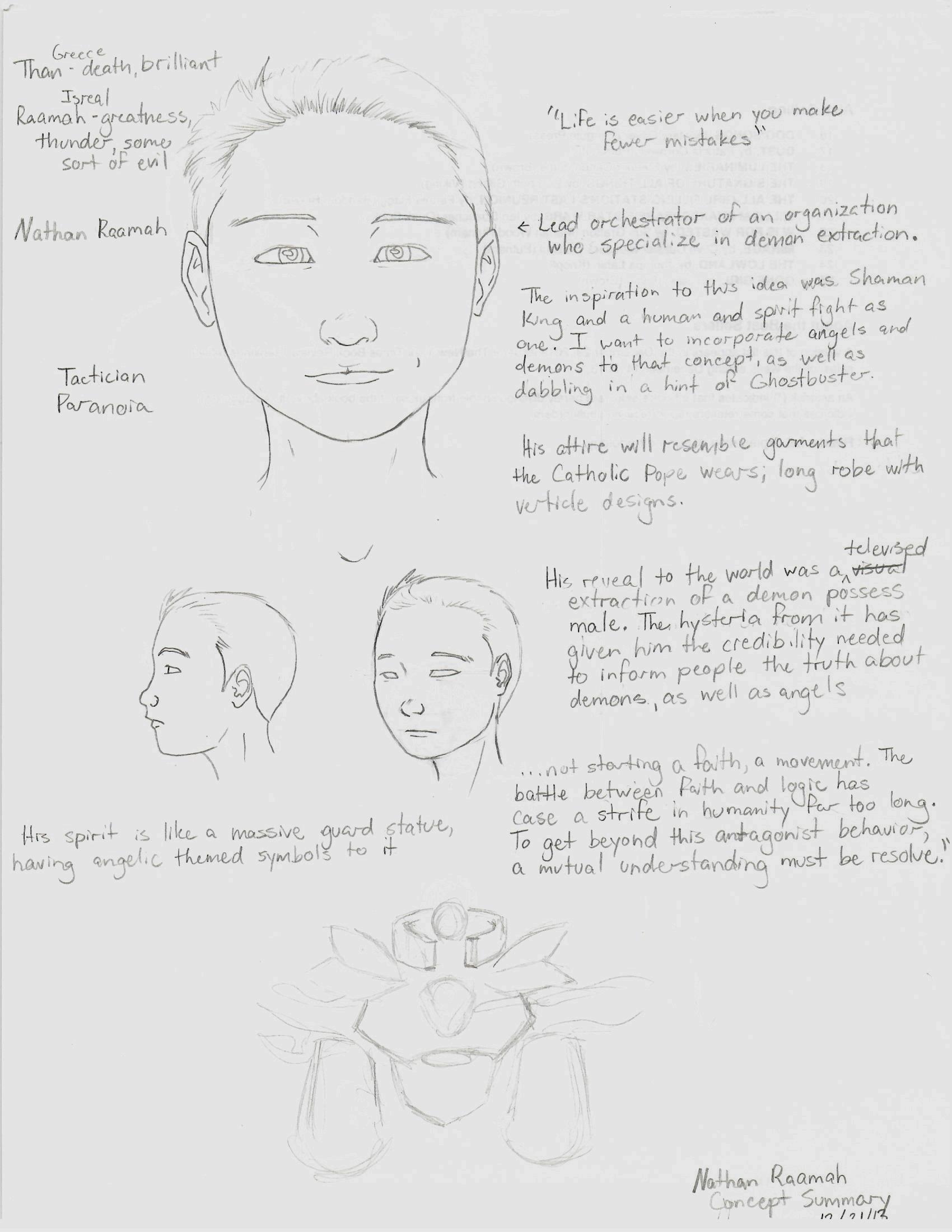
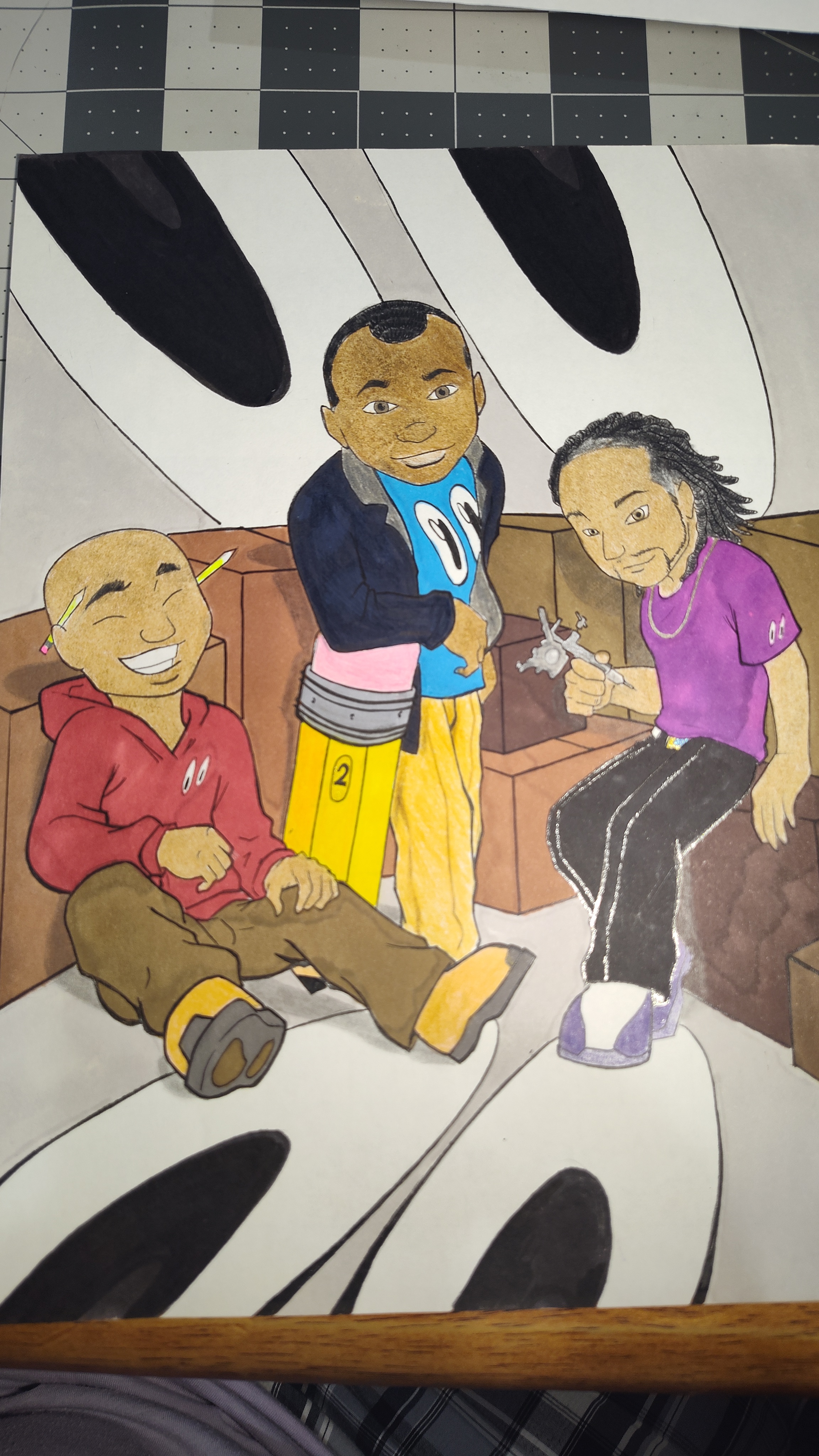
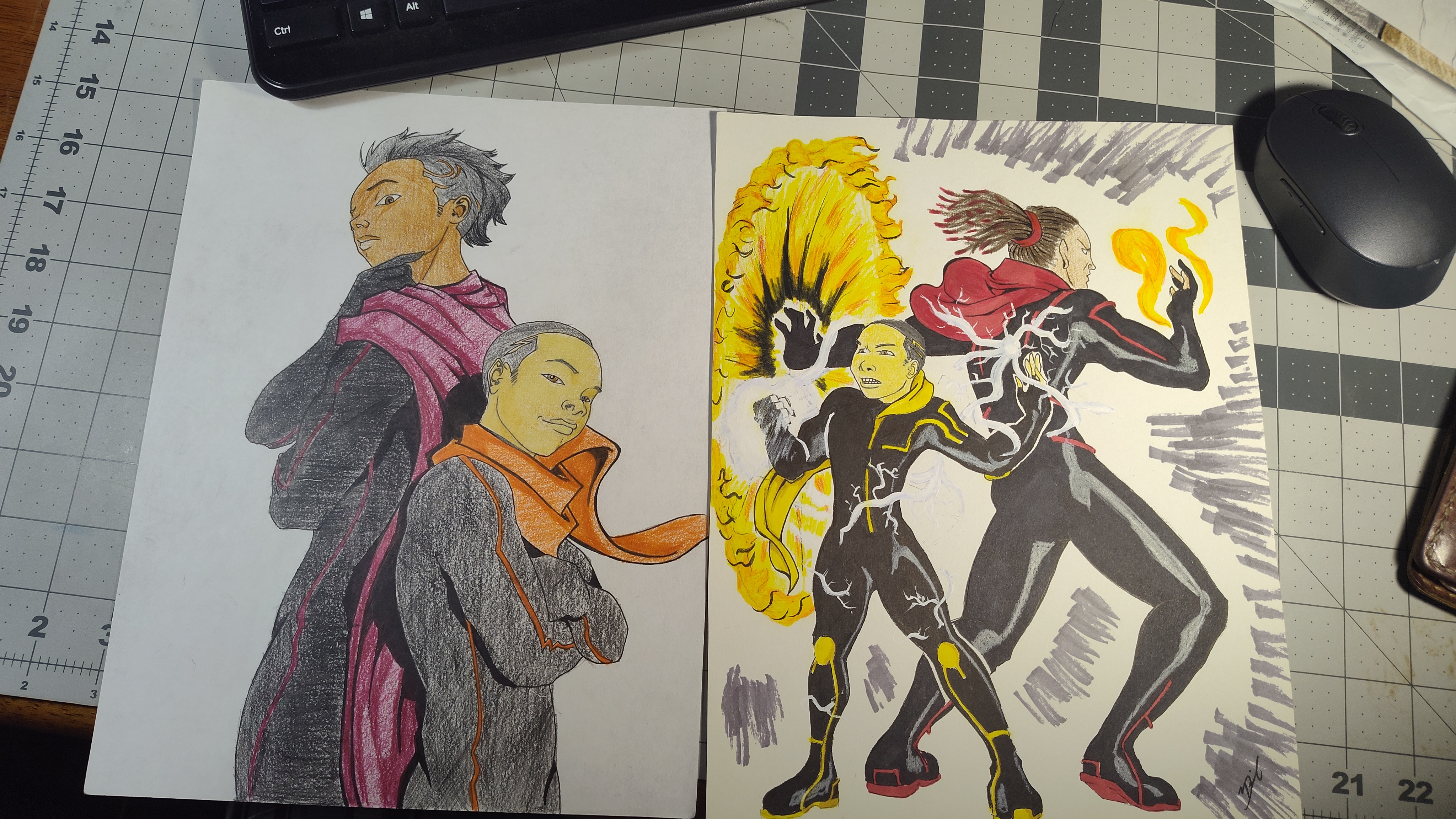
These concepts were illustrated during the hype of my interest in Shaman King. I regret not dating these notes and drawings, but I’m glad I kept them.
Revisiting old art is good therapy.
The first few drawings were just an interpretation of my character in the Shaman King universe.
These are the only notes I wrote to plan out an original story. Character naming and draft writing point on make coherent an awkward documentary-style dream. I not written enough to go from; the story is fresh enough in my mind that the visuals reminded me of where I wanted the story to be about.
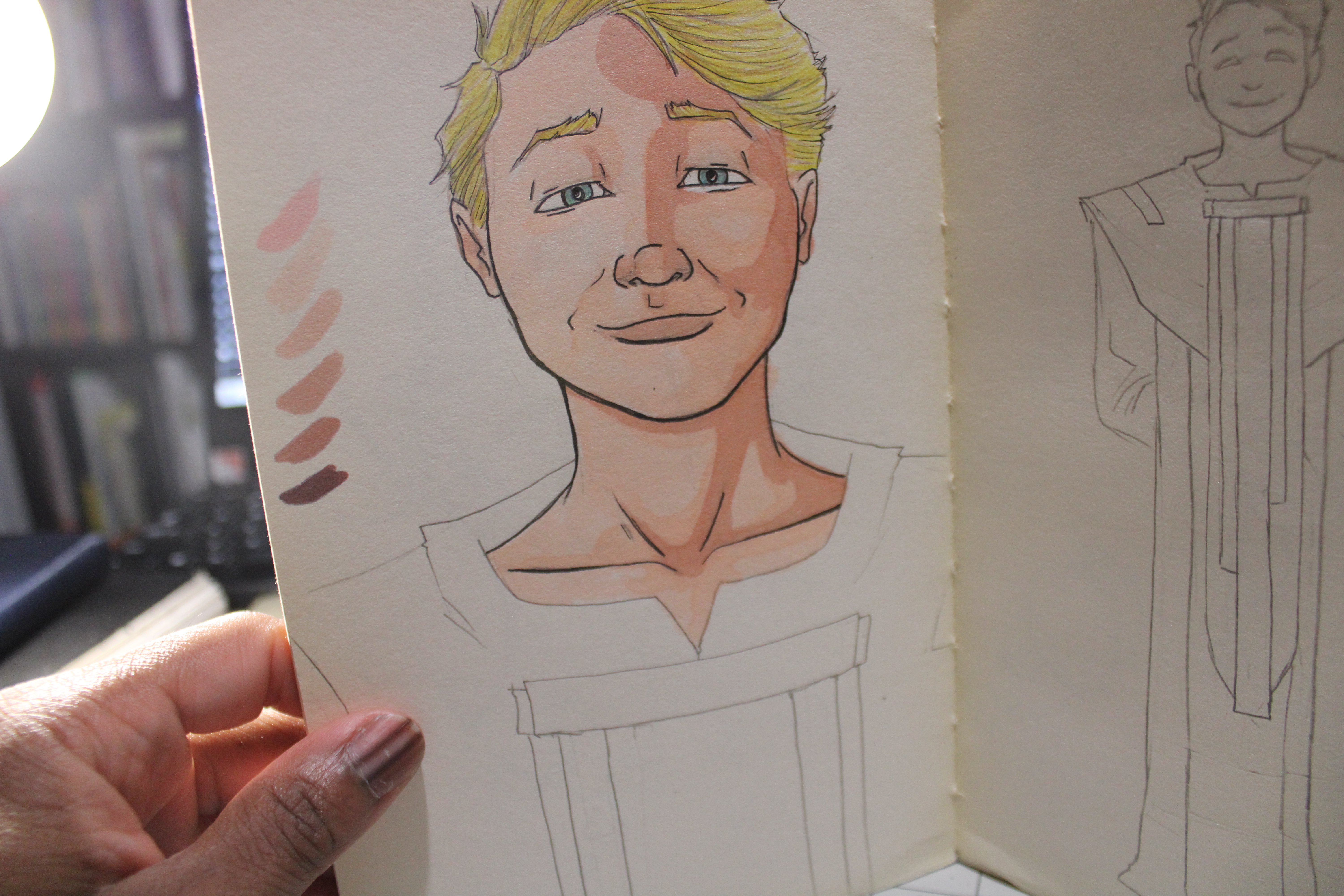
The most recent illustration I worked on got lost. What’s pictured above is the last illustrations I’ve done based on the three main characters. I got skin tone Copic markers and experimented with them. They may not be strong colors, but they mix extremely well.
I have other good drawings to share from the years I drew a lot. It feels odd relying on decade-old illustrations as material to share. But they’re the best options at this point. Too much time slipped away from these ideas and today. I know how stories work thanks to what I’ve learned over the years, but the experience of telling stories never developed. That was lost in the years I didn’t draw.
I see my old artwork as therapy because it reminds me of a slower point in my life. I was curious and I had time to enjoy my curiosity. But it gives me hope that my art is even greater now than in the past. I have a greater understanding of storytelling. I’m far more inclined to research and plan. I know how to think about art beyond the pure enjoyment or just itching my curiosity. The therapy also comes with knowing greater works lie ahead.
Where once time was the only barrier, effort takes its place.
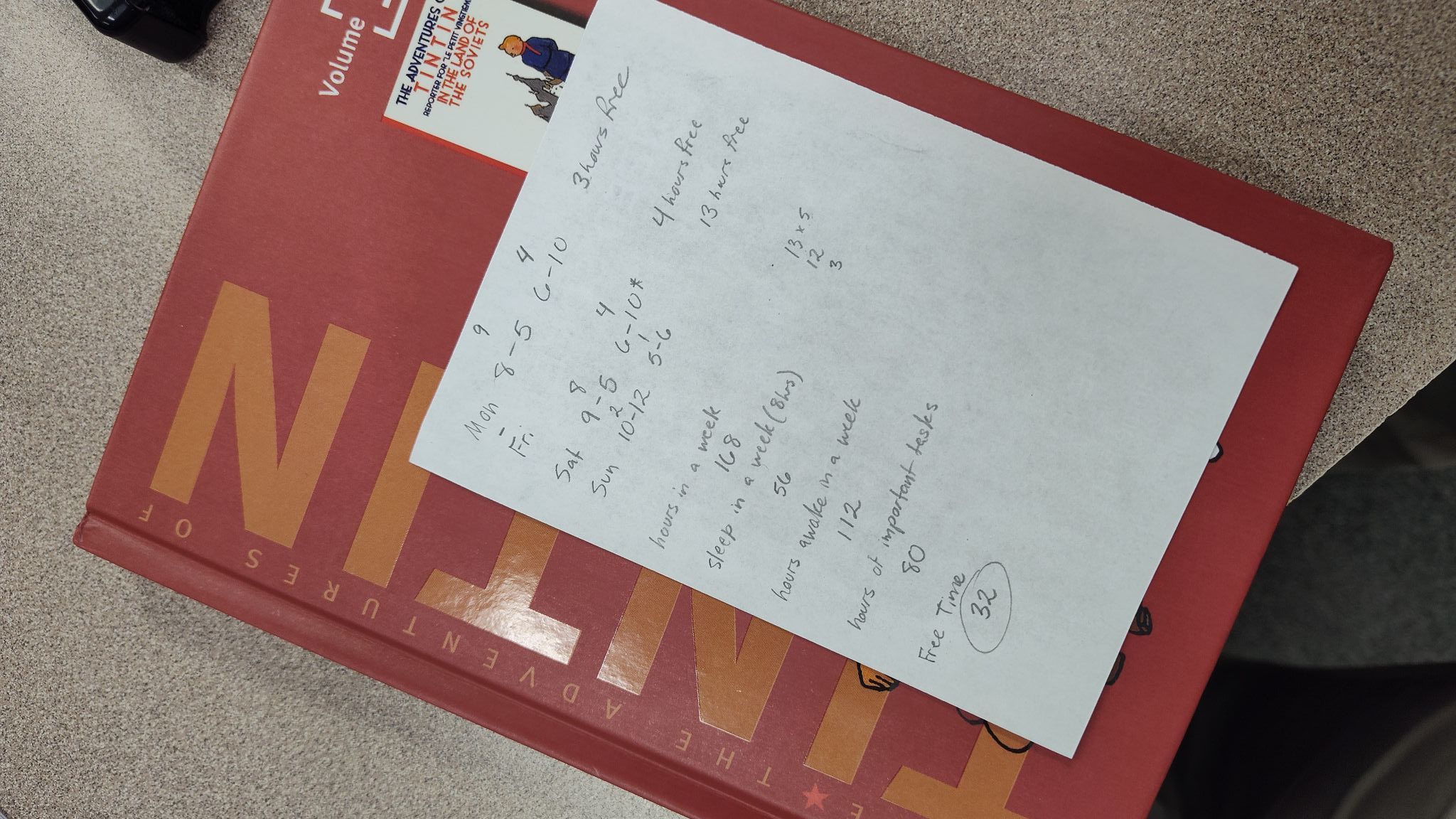
I have thirty-two hours a week, on average, of free time.
I unwind from my busy schedule during those hours. Or I use that time to reorganize my life, clean my apartment, and socialize with family and close friends.
The amount differs with every interruption and lag. But those hours are the norm.
Thirty-two house are what I have to go by for this art pursuit to work.
In Dispatch x002 I talked about what and how I will practice to improve my drawing skills. To see those routines through, I have to consider when I’m capable of doing the work. This has been the least of the two biggest barriers.
Mornings are ideal because it’s before other commitments get in the way. Mornings are when my mind is clearest and my energy is at its highest. Drawing at the end of the day is possible, but I have to fight against lethargy to get anything drawn.
What makes my mornings so difficult to maintain is my phone addiction. I love YouTube and other forms of entertainment, and my phone feeds the addiction. Without it, going to bed early and rested would be simple. And going to bed early ensures my mornings are relax and focused.
I have a stronger reason to kick that habit this time around. I won’t be able to promote myself as an artist if I don’t post. And I can’t post if I’m not drawing. So I will kick this addiction and track the gradual progress in future posts.
Sixteen years ago I was capable of pursuing an art career.
I landed my first job at nineteen and moved into an apartment a year later. That job covered my living expenses while having disposable income to invest in my art. My apartment was large enough to create a small but dedicated art space. Developing a fanbase with my art would take some years before my art could support me, so this beginning was perfect.
Also, I love my job. I still had the stamina to create outside of my 40-hour work week.
But what I was capable of never manifested. Many internal behaviors and habits fizzled my creative pursuits.
No execution to any goals I set for myself.
No discipline even after learning how to be a professional artist.
Doubt inspired by weeks and months I didn’t draw.
Allowing pleasures and distractions to take the fore front of my life.
The art supplies, books, recorded lectures, and notes became nothing but decoration pieces in the apartment of someone who didn’t do art.
Sixteen years can turn a beginner, no-name artist into a well known professional. A draftsman earns a Bachelor’s Degree and intern experience in half the time. To do nothing within the same period is as close to a failure as anyone can be.
The choice I made sixteen years ago gave me the life I live now. I chose to be a spectator of art when I wanted to be an artist. I chose to only consume when I found fulfillment in creating. I lax on many wonderful opportunities. I now live the results of those choices.
The greatest lesson learned from Brian Tracy’s most famous book Eat That Frog, and a recent read, The Art of Practice by Laido Dittmar, was to do hard things first. Barbell Squats are the hardest weight workouts I could perform. At work, updating lists and files are the most difficult because it’s incredibly boring. Art is hard since I don’t draw enough; but if I were to pick its greatest difficulty, extending my drawing time past an hour would be it.
That time needs to be filled with difficult techniques to take me out of my comfort zone, but not enough to where I quit out of frustration. Mechanical Drawing and Background are my weakest. Lo and behold, I have an excellent collection of books that focuses on all of my skill issues.
I could spend my entire art career drawing, tracing, and referencing from the Etherington Brothers’ books.
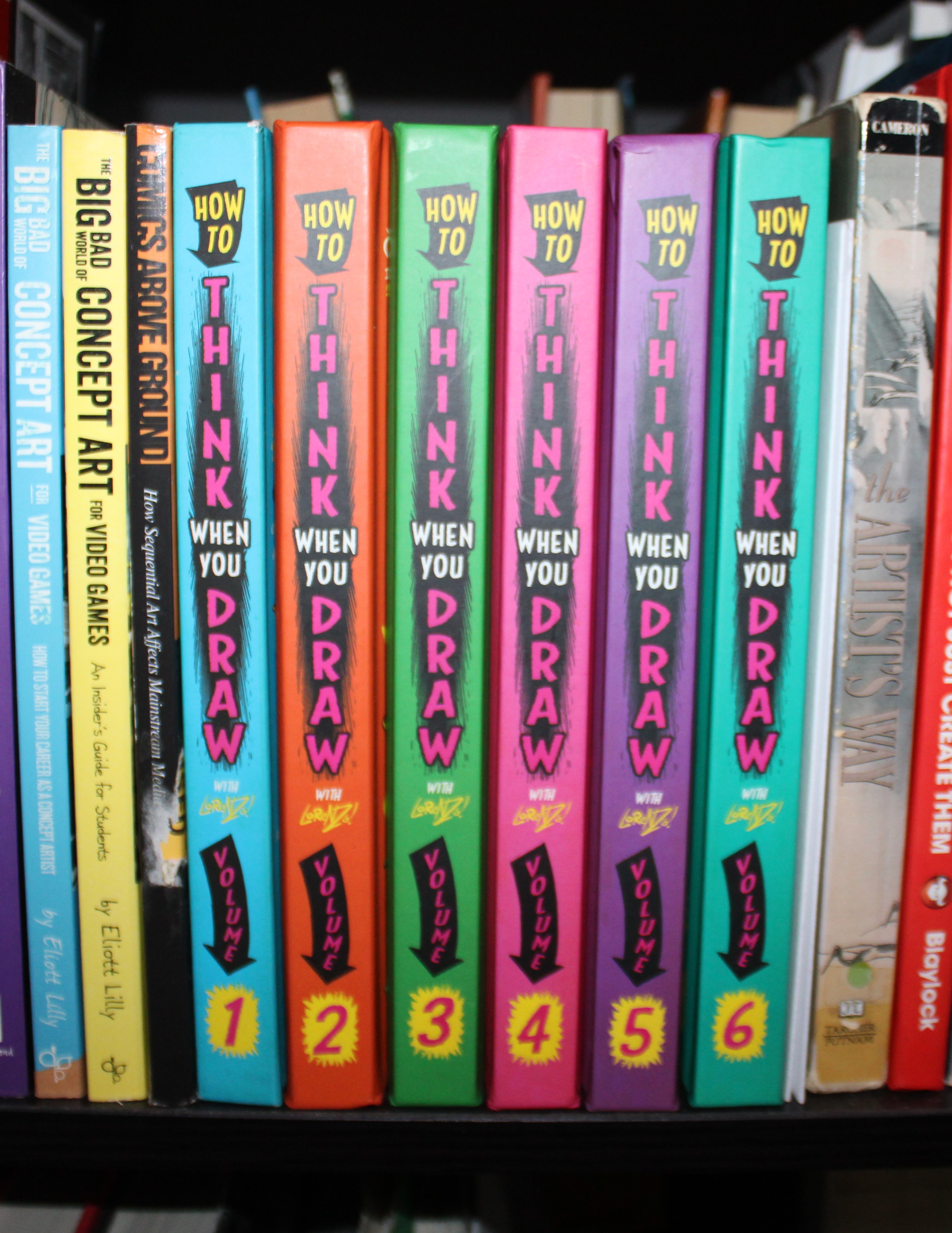
How to Think When You Draw series by the Etherington Brothers is a treasure trove of references and tips for anything you’re trying to learn. Every installment brings new tips and ideas that they already have online for anyone to study for free. I prefer the convenience of books to help curb my internet addiction, and to have the information in one spot.
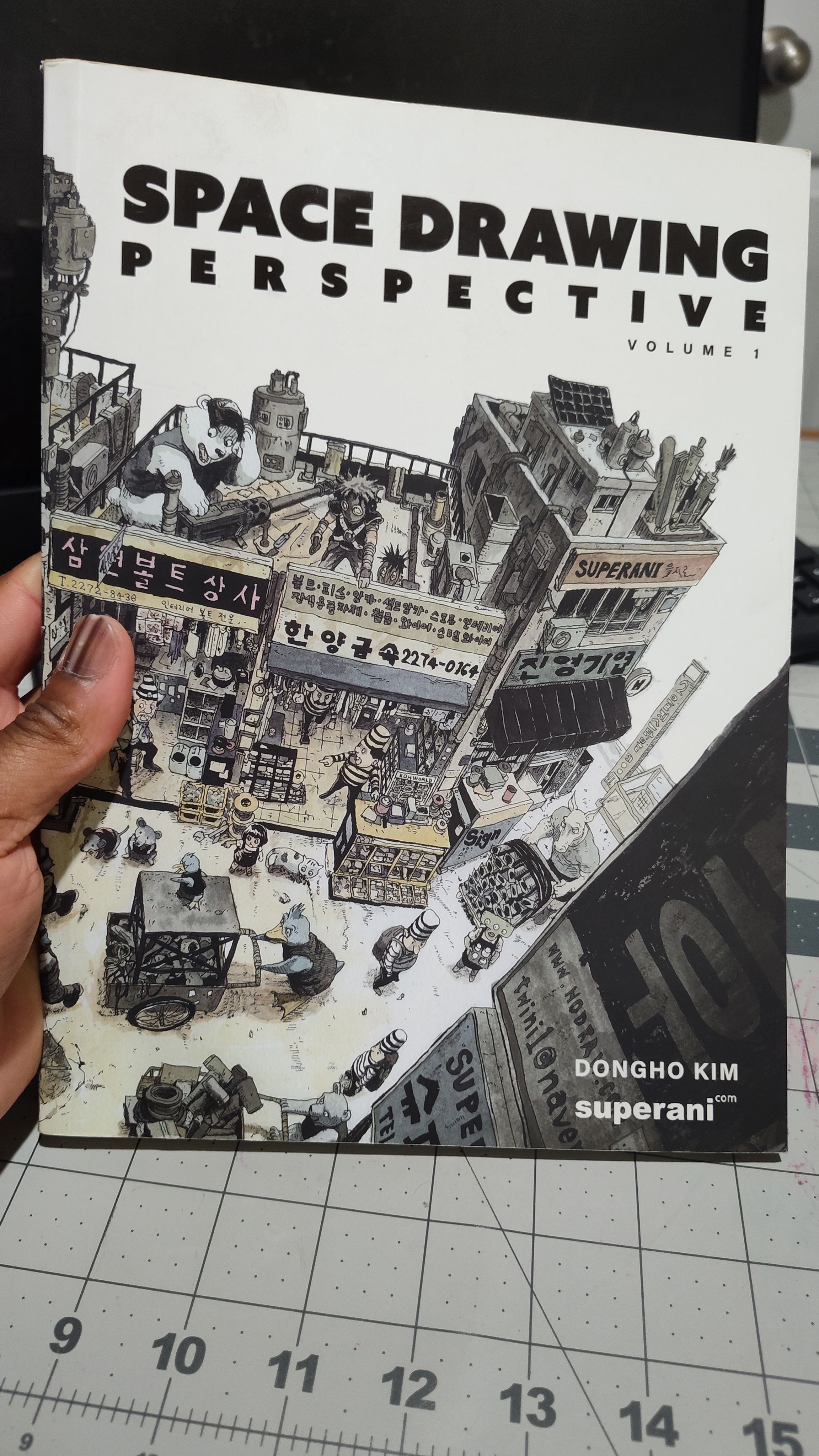
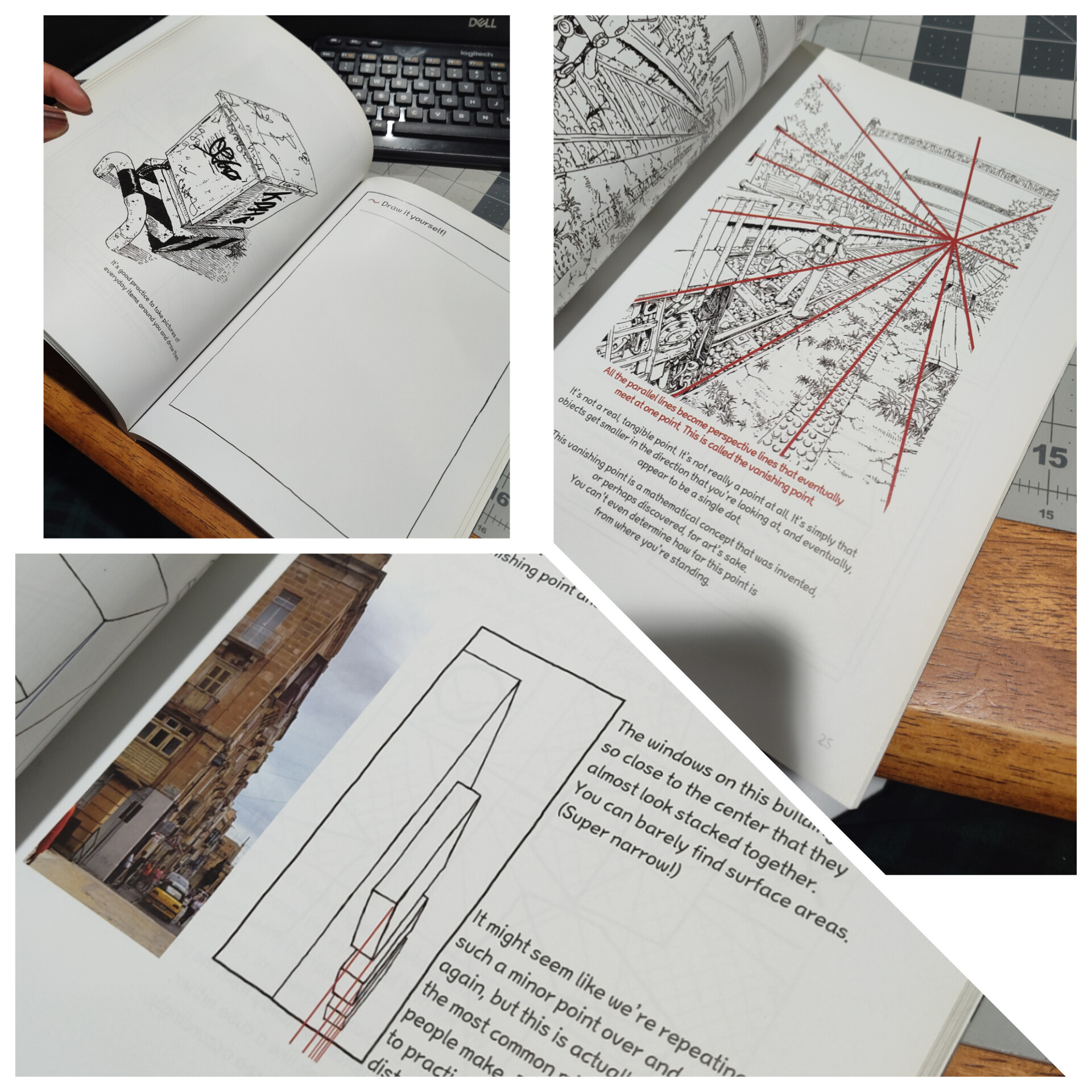
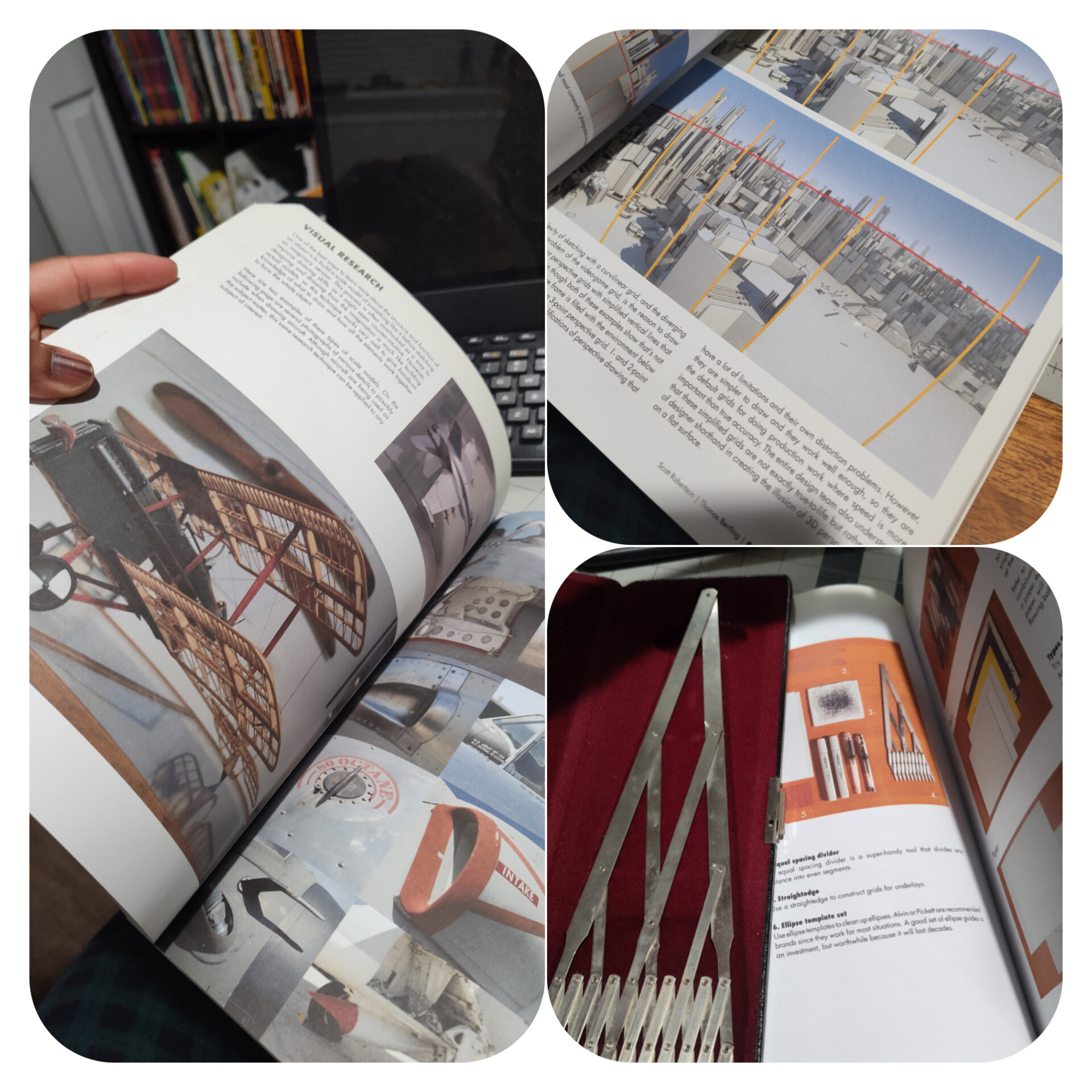
I followed Dongho Kim some time around work with Superani. I love the way he handles perspectives and environmental drawings
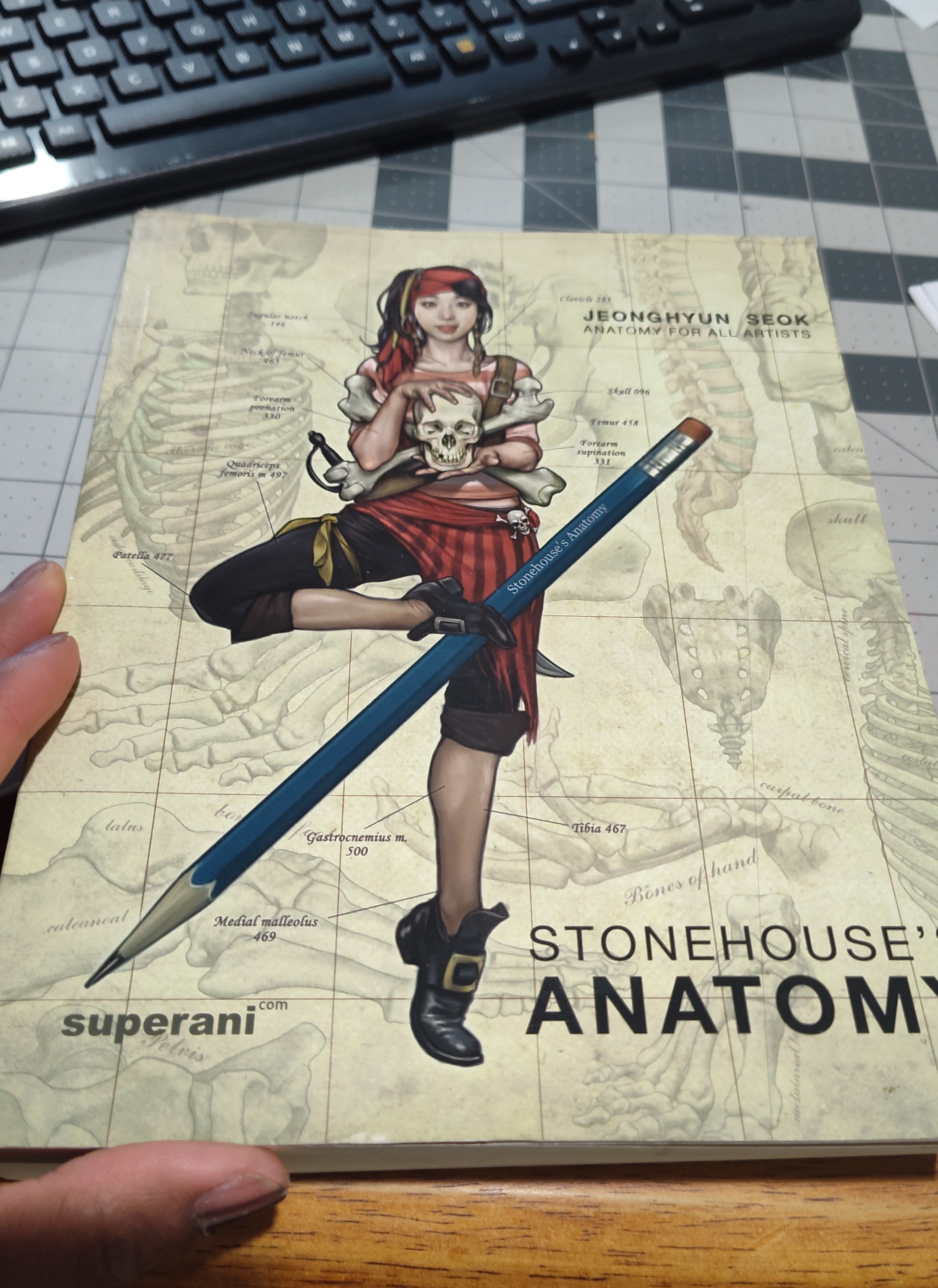
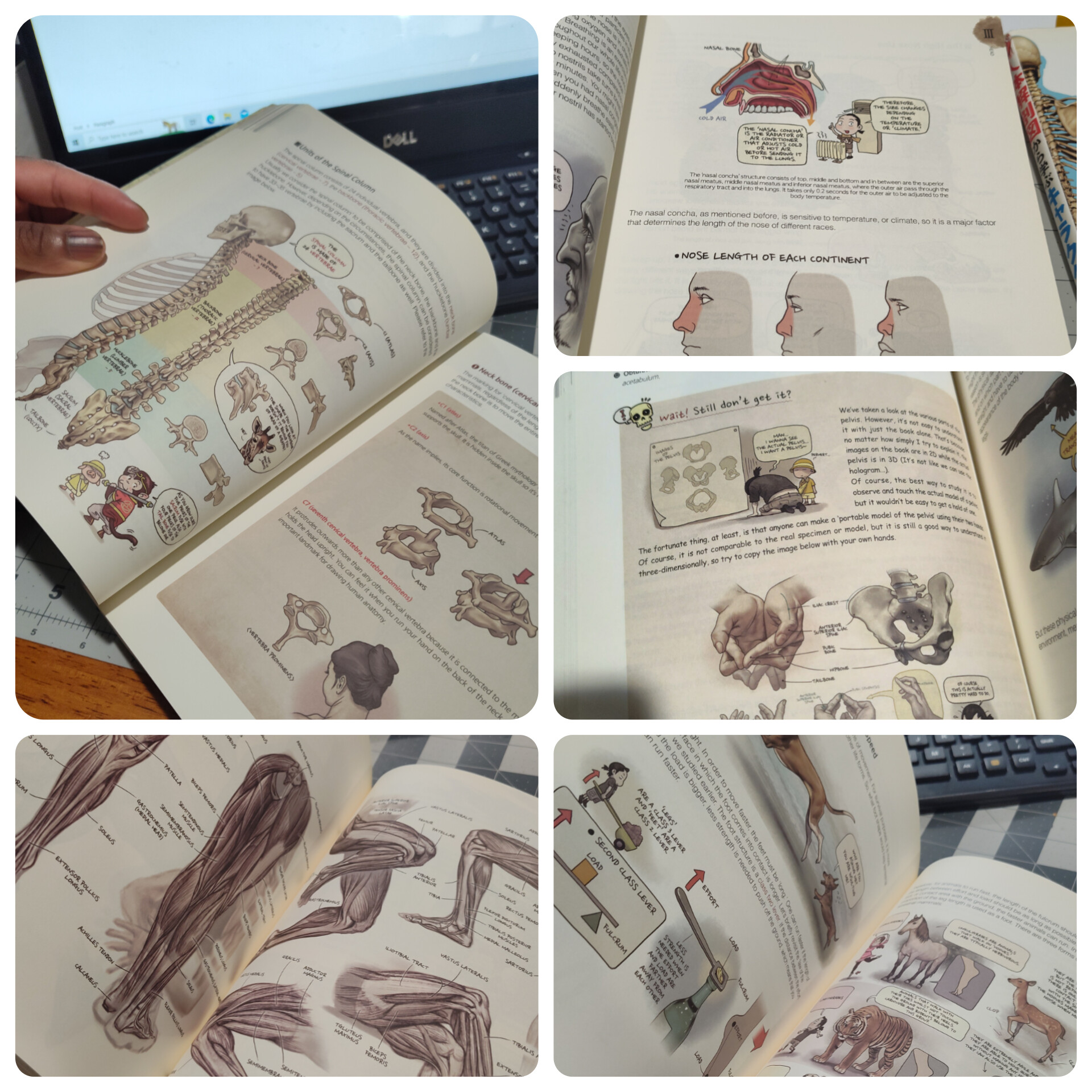
The reviews from YouTubers , and looking at the artist’s work on social media. This book is worth its weight in gold. To many, Jeonghyun overloads you with his insight on drawing the human anatomy, but it’s that intention to detail that makes his artwork look so photorealistic, even when the art style is far from it.
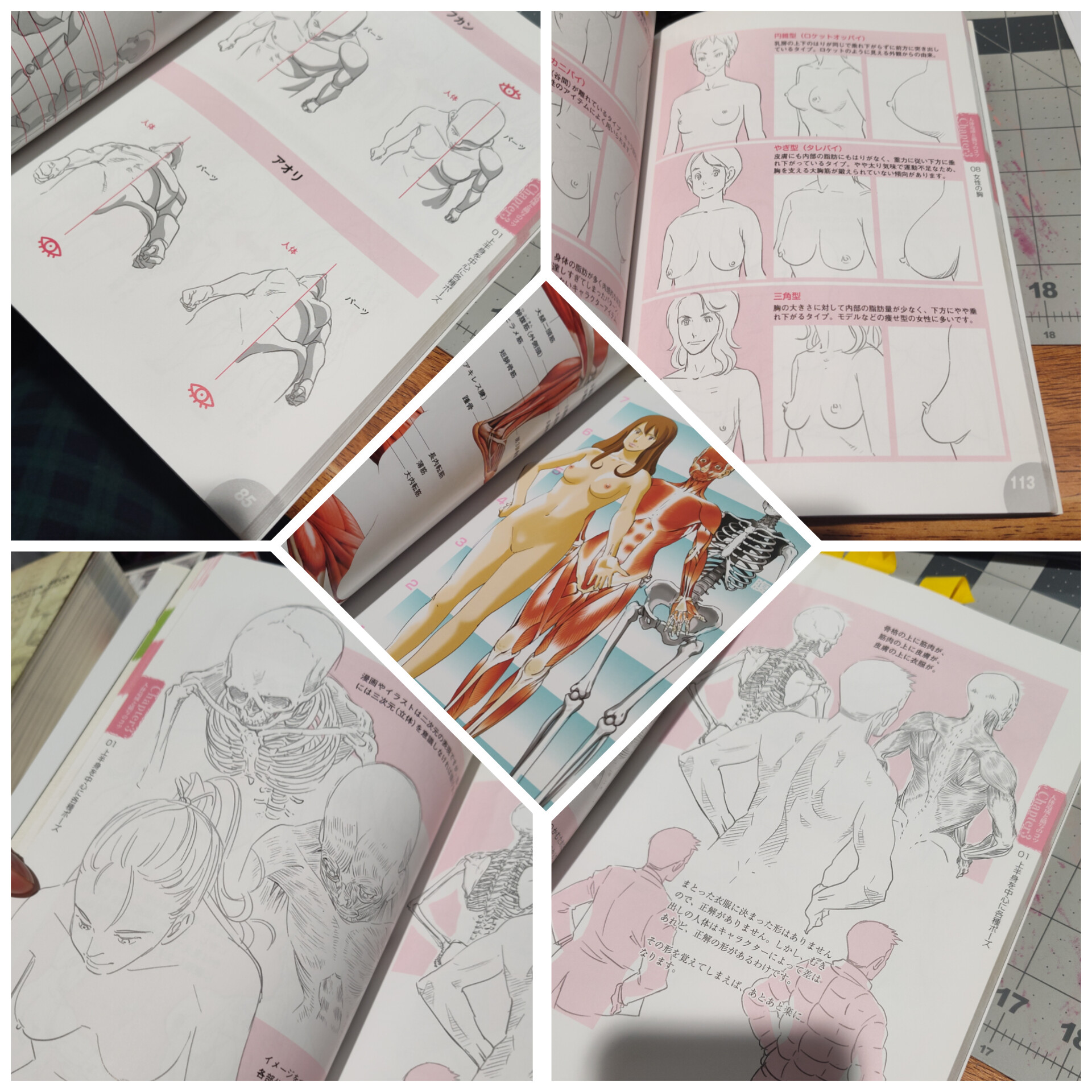
I wish there was an English version!
This anatomy book is a simplified attempt at understanding human anatomy for artist, and he manage to cover every necessary point. I can only wonder what nugget of information is in the written part of the book.
I actually came across the full book shared on social media and downloaded it. But once again, I wanted a physical copy.
This book leans more towards technical drawing than what I’m familiar with. And I didn’t get into it because it required an equal space divider. By the time I could order it, my interest went away. I have a theory that if I practice technical drawing as it should be (draw something to scale), drawing it artistically would be easier.
Now, I have the intention of testing that theory.
I got anxious looking through my book collection to see where to start practicing. But this anxiousness to start has happened before. Beginner’s rush depletes after the first few minutes of drawings. I’ll need to look for ways to make what I draw engaging long enough to internalize the act of drawing again. And since I’m drawing to earn a living, what I draw needs to be attention grabbing and worth owning.
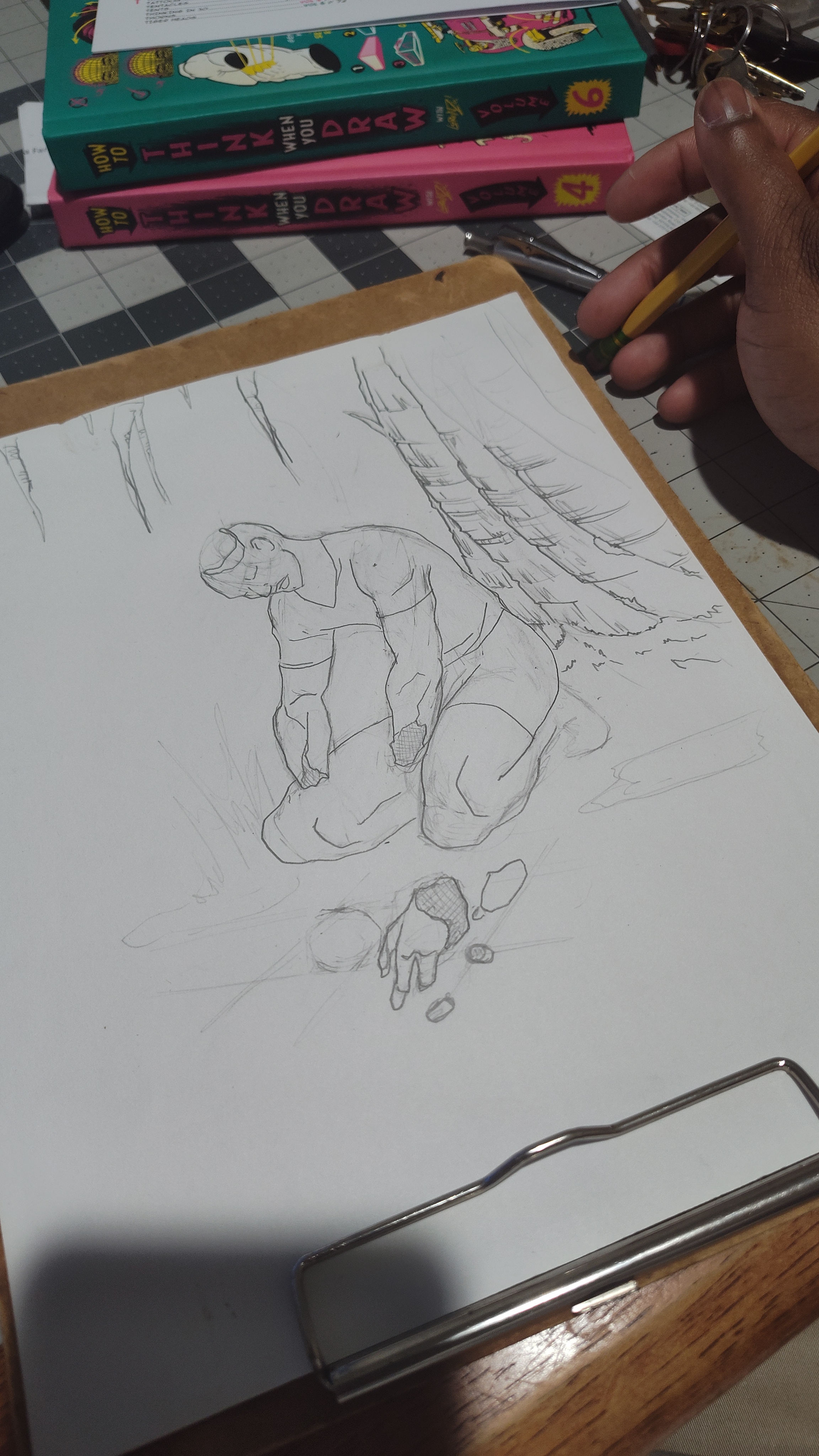
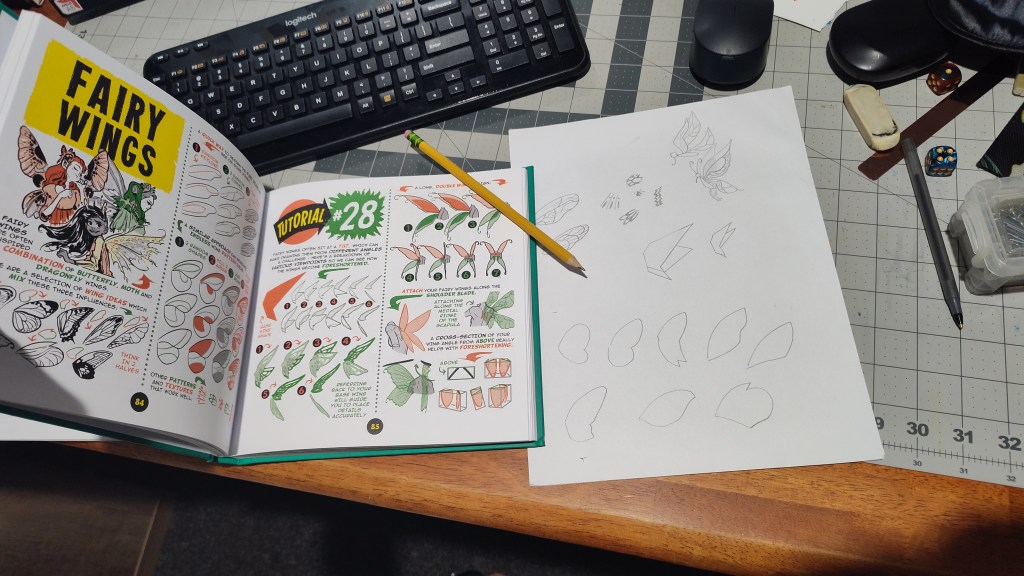
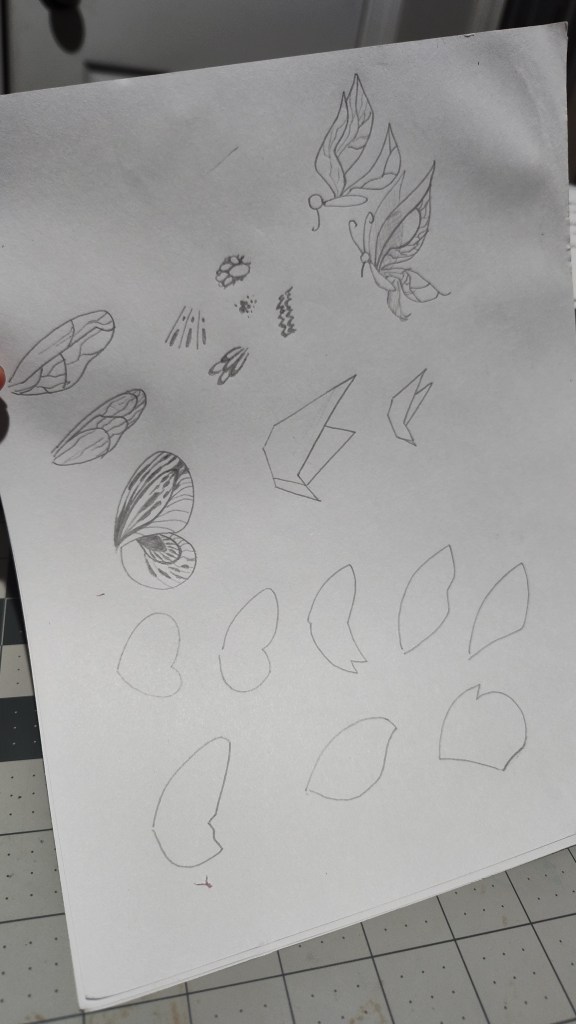
I’ll need a few days to really think of something worthwhile. I should still draw in the meantime. And speaking of drawing, this was the first set of practice I did while taking these pictures. This was a tutorial from How to Think When you Draw Volume 6.
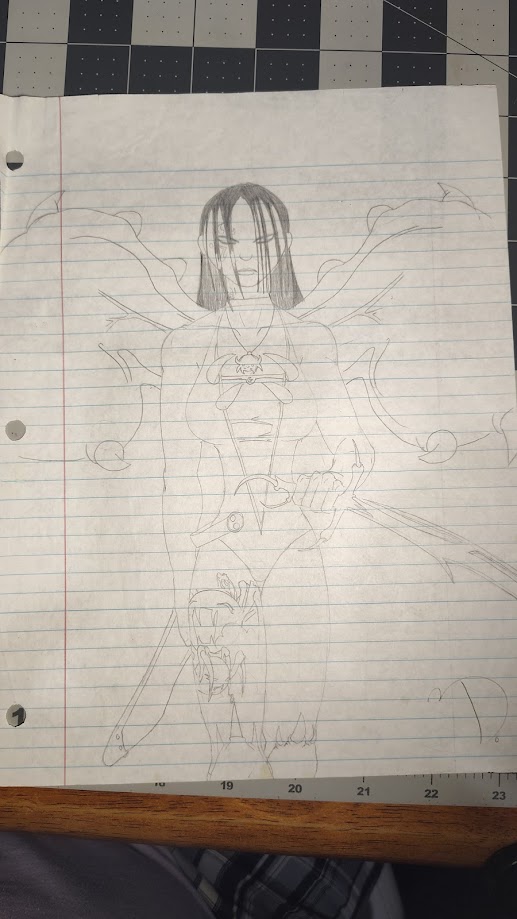
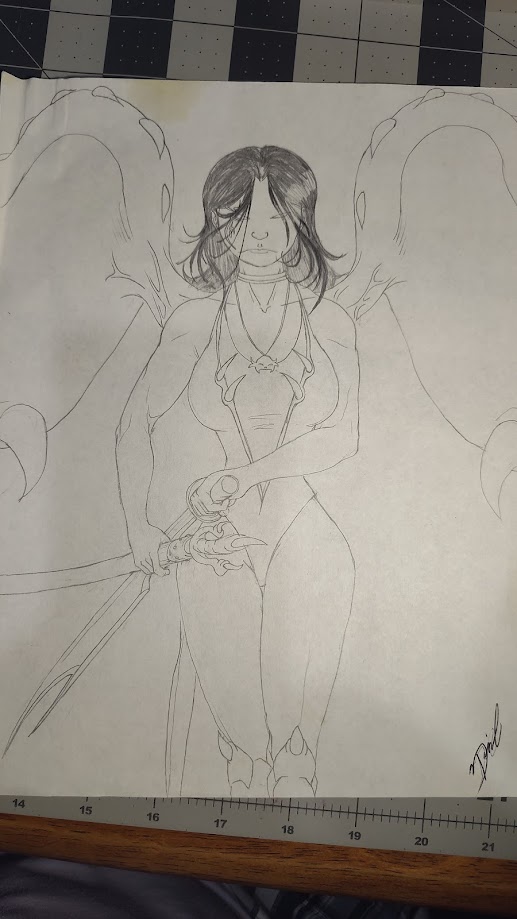
There was a time I would challenge how well my art has progressed over the years. I’ll take an illustration I’ve done (and hopefully dated, which was also inconsistent) and see if I could better recreate it.
I loved doing these illustrations.
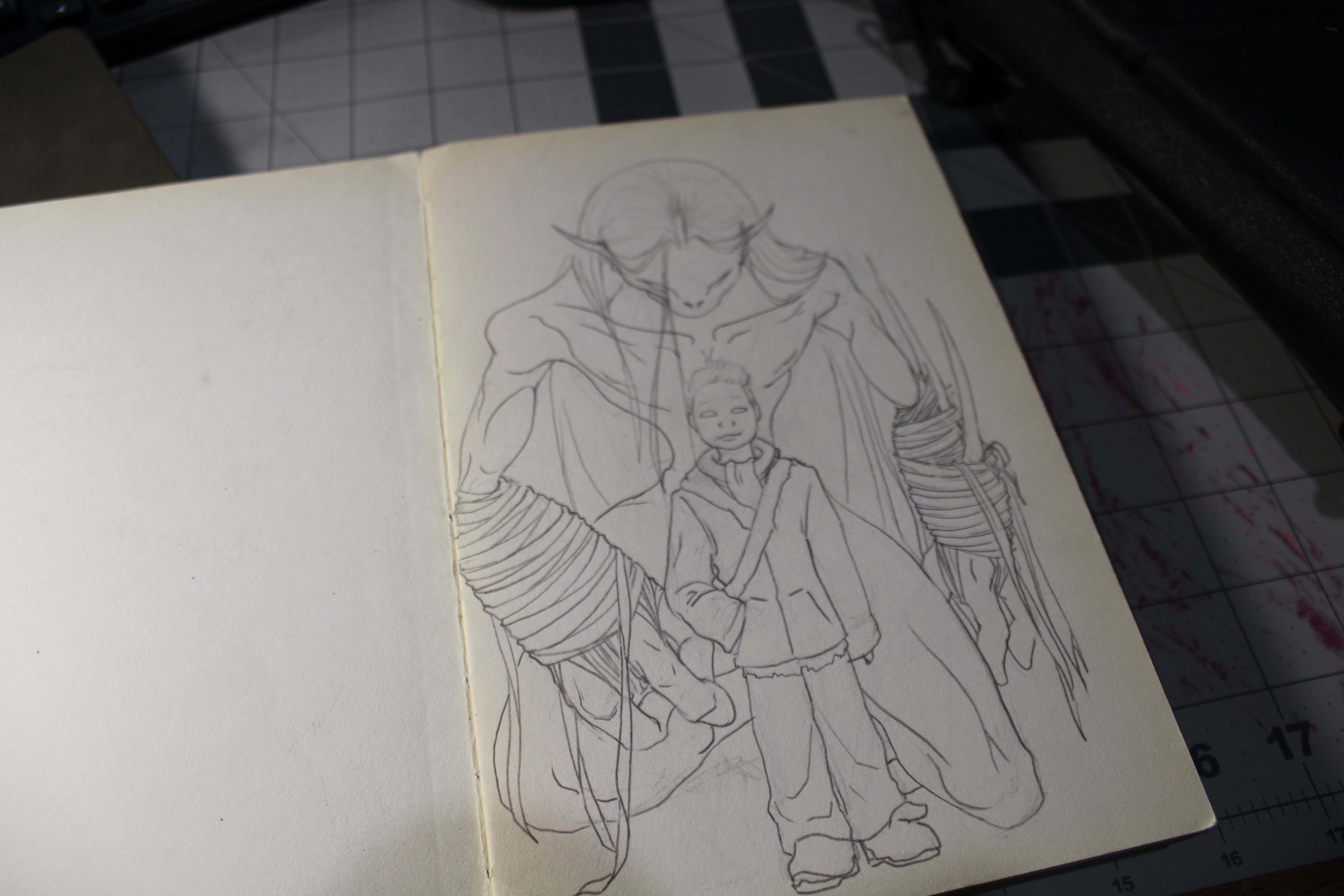
Demon Woman with Wings. This is my early attempt at drawing creepy but highly detailed illustrations
It was not just the art that improved; I had a ideal backstory and solid reasons for making the design changes. And my improvements were hard NOT to see.
Each of these shared drawings were done a few years apart from each other. I hate I forgot to write the date of completion on each.
Self-portrait of me in three different age groups.
As I look at them now, I ponder where I would be creatively had I continued to draw more often. If not every day, where would five hours a week take me after sixteen years?
The Demon Woman with Wings was lacking necessary texture design on her outfit and a dynamic posture, but I improved greatly on her proportions. I wanted the self-portrait drawing style to be simple, but my face could’ve looked more like me with practice. These are weaknesses that would’ve corrected themselves within the years I stopped drawing.
I lost a lot of drawing time. Time I’ll never get back. A celebrated artist with an admirable body of work are the ashes of what could’ve been.
Regret has taken its place. I’ve lost more to memory of backlog of ideas compared to what I remember. I am the man in the parable where he buried his talents in fear of losing them. I feel the call of the Master ready to examine what work I done with the talents he gave me.
An antagonist in three different forms, from a story I never fleshed out.
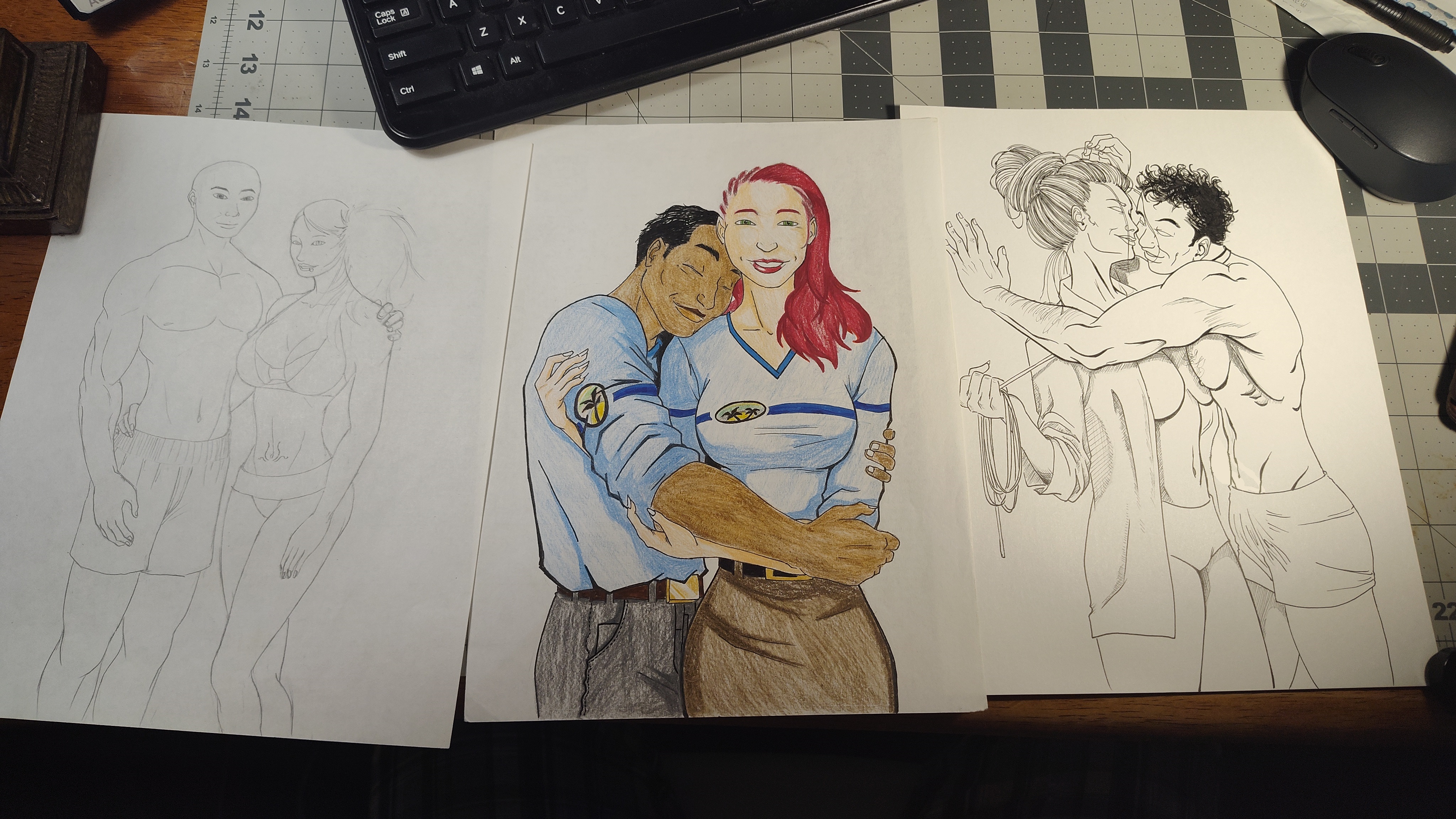
A drawing group started by a great friend. We were trying something but didn’t take time to continue.This is one of the few drawings I’ve put a date on the back. They were drawn a year apart with the left completed on April 28, 2012, and the right on July 16, 2013.Only the drawing on the far left was dated (July 26, 2010). I didn’t know the technique to even out color pencils so I colored very little.
I’m going to pretend that it hasn’t been years since I made a blog post.
THEY’VE ARRIVED!
Thanks to the help of artist Brandon Treadway and the printing services of Vistaprint, I’ve created my first set of business cards. I reduce my contact info to top three ways to reach me. These cards will be included in every commission piece I deliver to people.








 deeintrigue